Unlock the White House Watch newsletter for free
Your guide to what Trump’s second term means for Washington, business and the world
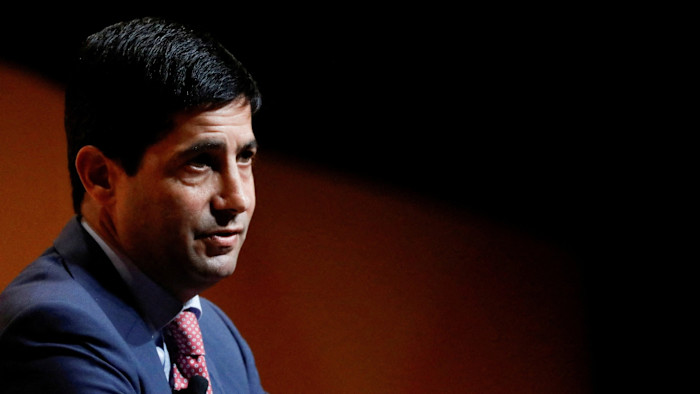
Donald Trump’s pick to head the Federal Reserve will tell Congress that the independence of US rate-setters is not “particularly threatened” when politicians call on the central bank to shift borrowing costs.
“I do not believe the operational independence of monetary policy is particularly threatened when elected officials — presidents, senators or members of the House — state their views on interest rates,” Kevin Warsh will say in his opening statement to the powerful Senate banking committee on Tuesday.
In prepared remarks seen by the FT, he will tell senators that “central bankers must be strong enough to listen to a diversity of views from all corners” and “humble enough to be open minded to new ideas and new economic developments”.
The remarks follow repeated calls from Trump for the Fed to cut interest rates, with the US president labelling current central bank chair Jay Powell “a numbskull” and a “moron” for failing to obey.
Powell has said an ongoing Department of Justice probe into his handling of a $2.5bn renovation of the Fed’s headquarters is a pretext to pressure US rate-setters into lowering borrowing costs.
Thom Tillis, the Republican senator for North Carolina who sits on the banking committee, which oversees the Fed chair’s confirmation process, has said he will block Warsh’s nomination from reaching the Senate floor until the probe against Powell is dropped.
Warsh, who would take over from Powell on May 16 at the earliest, will make clear that the Fed’s independence to set interest rates is “essential” to keep inflation under control.
However, the former central bank governor will also call on the Fed to “stay in its lane”, arguing that the central bank undermines its own independence when it “strays into fiscal and social policies where it has neither authority nor expertise”.
“The Fed should not act as some general-purpose agency of the US government or as an appellate court for matters that are rightly debated and decided elsewhere,” he will say.
The 56-year-old will make a lengthy case for his suitability for the role, telling lawmakers that he will bring “the experience of a one-time insider and the questioning spirit of an outsider”, pointing to his education at Stanford, his work on Wall Street and his previous experience as a Fed governor.
Warsh will also tell lawmakers that the concept of independence “is at its peak” when it comes to carrying out monetary policy, but that the same degree of independence does not apply to its other congressionally mandated functions.
“Fed officials are not entitled to the same special deference in their stewardship of public monies . . . or in bank regulatory and supervisory policy . . . or in areas affecting international finance, among other matters,” he will tell the committee.
The central bank plays a big role in banking supervision but already collaborates with the US Treasury and other regulatory agencies in designing regulation and overseeing risks to the financial system.
Warsh will also tell senators that the Fed undermines its own independence when it fails to live up to its mandate to keep inflation under control, which he will argue causes people to “lose faith in our system of economic governance, raising doubts whether monetary policy independence is all it’s cracked up to be”.
Inflation rose to its highest level in decades after the Covid-19 pandemic, reaching more than 7 per cent in 2022. It remains above the Fed’s 2 per cent target, with price pressures set to rise in the coming months due to the impact of the Iran war on energy prices.
“Congress tasked the Fed with the mission to ensure price stability, without excuse or equivocation, argument or anguish,” Warsh will say. “Inflation is a choice, and the Fed must take responsibility for it.”
#Kevin #Warsh #Fed #independence #threatened #political #pressure
About the Author