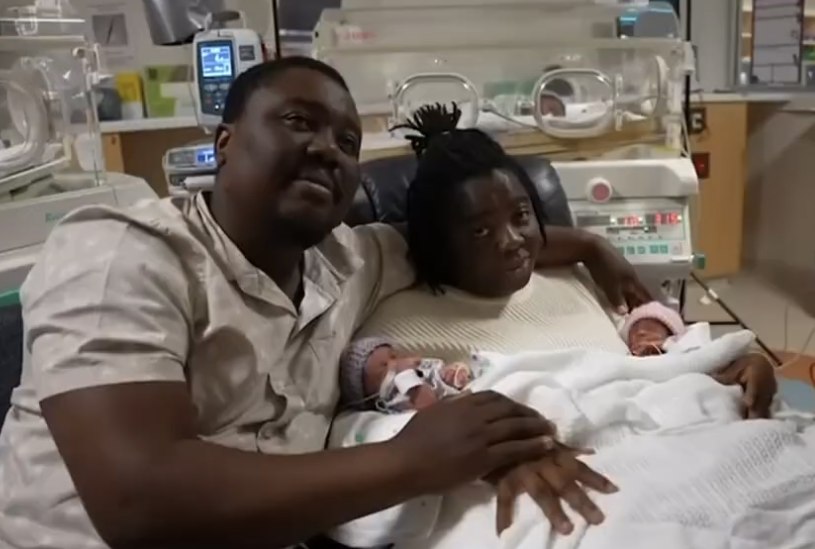
PERTH, Australia — A Kalgoorlie couple experienced a life-changing surprise this week when Belinda Lotsu, 45, delivered quadruplets at Perth’s King Edward Memorial Hospital, marking Western Australia’s first set of quads in six years. The babies — three girls and one boy — arrived via cesarean section on Tuesday at 32 weeks and three days, delighting and overwhelming their parents who had prepared for triplets.

The newborns, named Amy, Amana, Amber and Amon, weighed between approximately 1.0 and 1.6 kilograms at birth, with hospital staff describing them as doing “exceptionally well” despite their prematurity. All four are receiving specialist care in the neonatal intensive care unit at King Edward Memorial Hospital, Western Australia’s premier maternity facility, and are expected to remain there for four to six weeks.
Belinda and her husband Emmanuel Lotsu already have a three-year-old son. The couple turned to IVF after a previous miscarriage, initially hoping for one healthy baby. Doctors discovered the fourth fetus more than halfway through the pregnancy, stunning the family and medical team.
“I told the doctor it was not true,” Belinda recalled in interviews, reflecting the shock that turned their planned triplet pregnancy into a rare quadruplet delivery.
Rare Occurrence in WA
Health records show these quadruplets represent only the 15th set born in Western Australia, with the last occurring in 2020. King Edward Memorial Hospital delivers an average of five sets of triplets per year, but quadruplets remain exceptionally uncommon, occurring naturally in roughly one in 700,000 pregnancies and even less frequently with assisted reproduction.
The pregnancy triggered extensive planning by the hospital. Teams coordinated emergency protocols, neonatal capacity and maternal safety measures well in advance. The planned cesarean ensured the safest possible delivery for the high-risk multiples.
Dr. staff at the hospital praised the babies’ strong birth weights for their gestational age. “They’re all doing exceptionally well,” a spokesperson noted, highlighting the positive early indicators for their development.
A Family’s Journey
The Lotsu family, based in the Goldfields town of Kalgoorlie, about 550 kilometers east of Perth, faced a rollercoaster of emotions. After struggling with fertility and enduring a miscarriage, the IVF success brought immense joy tempered by the challenges of a multiple pregnancy. Emmanuel supported Belinda throughout, and the couple expressed gratitude for the medical team that guided them through the unexpected expansion of their family.
From three family members to seven in minutes, the Lotsus now navigate the practical realities of caring for quadruplets alongside their toddler. Community support has already begun pouring in from Kalgoorlie and beyond, with offers of assistance expected to grow as the babies prepare for homecoming.
Medical and Logistical Challenges
Premature quadruplets require specialized monitoring for respiratory issues, feeding support and temperature regulation. King Edward Memorial’s neonatal unit, equipped for complex cases, provides round-the-clock care. Doctors anticipate gradual progress, with potential discharge in coming weeks if the infants continue thriving.
Multiple births carry higher risks for both mother and babies, including gestational diabetes, preeclampsia and preterm labor. Belinda’s successful delivery at 32 weeks and three days reflects strong prenatal management typical for IVF multiples.
The case underscores advancements in fertility treatment and obstetric care in regional Australia. Families from remote areas like Kalgoorlie often relocate temporarily to Perth for high-risk deliveries, adding emotional and financial layers to the experience.
Broader Context of Multiple Births
Australia sees rising multiple birth rates linked to assisted reproductive technologies, though strict guidelines limit embryo transfers to reduce risks. Quadruplets remain headline-worthy events due to their rarity. Similar stories in other states highlight both the miracles and complexities involved.
Public health experts note that while IVF expands family-building options, it requires robust support systems. WA Health continues investing in maternal and neonatal services to handle such cases safely.
Community and Social Media Reaction
News of the quadruplets spread rapidly across Australian media and social platforms. Messages of congratulations flooded in, with many praising Belinda’s strength at age 45. Viral posts celebrated the “instant big family” while acknowledging the demanding road ahead.
Parenting groups and local Kalgoorlie communities have mobilized, offering practical help ranging from meals to baby gear. The story resonates widely, evoking both wonder at the rarity and empathy for the immense responsibility of raising multiples.
Looking Ahead for the Lotsu Family
As the four infants gain strength in the NICU, the family focuses on recovery and preparation. Belinda and Emmanuel will balance hospital visits with caring for their three-year-old, likely relying on extended family and community support upon returning to Kalgoorlie.
Medical follow-ups will monitor the babies’ growth and development closely in the coming months. For now, the Lotsus cherish the surprise that transformed their family, viewing it as a profound blessing after earlier challenges.
Hospital staff describe the delivery as a coordinated success, reflecting years of expertise in managing high-order multiples. The arrival of Amy, Amana, Amber and Amon not only enriches one family but also highlights the capabilities of Western Australia’s health system in delivering rare miracles.
In a state where such events occur roughly once every several years, this quadruplet birth stands as a heartwarming reminder of life’s unpredictability and the resilience of families supported by dedicated medical professionals. As the Lotsus embark on their expanded parenting journey, well-wishes continue pouring in from across Australia.
#Surprise #IVF #Delivery #Stuns #Kalgoorlie #Family
About the Author