KANSAS CITY — For dairy processors, 2026 is shaping up to be full of familiar challenges. According to a recent report from McKinsey & Company, the industry’s path forward hinges on a dual mandate—protecting margins today while investing in growth for tomorrow.
The firm’s 2026 dairy executive survey highlights an operating environment shaped by inflation, labor constraints, supply chain volatility and regulatory uncertainty. These challenges have weighed on profitability, with margin pressures extending across multiple years. In the United States nearly 70% of dairy companies reported flat or shrinking margins in 2025, up from 66% in 2024 and 58% in 2023, highlighting a steady erosion rather than a short-term squeeze. Europe is facing similar strains, with 57% of companies reporting flat or declining margins.
As a result, keeping costs in check is a primary focus for dairy leaders on both sides of the Atlantic. About 65% of US executives ranked cost management among their top strategic concerns, citing sustained increases in raw materials and logistics as their biggest pressure points. Companies are responding by tightening operations, reassessing supplier networks and streamlining product portfolios in an effort to preserve profitability. In some cases, that has meant reducing the number of product variations to focus on higher-margin options, while others are investing in automation and plant efficiency to reduce labor and maintenance costs over time.
At the same time, supply-side risks are becoming more complex. In the United States, milk production rebounded in 2025, rising 2.6% year over year, but growth is expected to slow to about 1.5% in 2026. In the European Union, milk production is expected to be flat to up less than 1%, constrained by environmental regulations, herd reductions and ongoing animal health challenges. Weather volatility and periodic disease are complicating the landscape, tightening supply growth and forcing processors to rethink sourcing strategies.
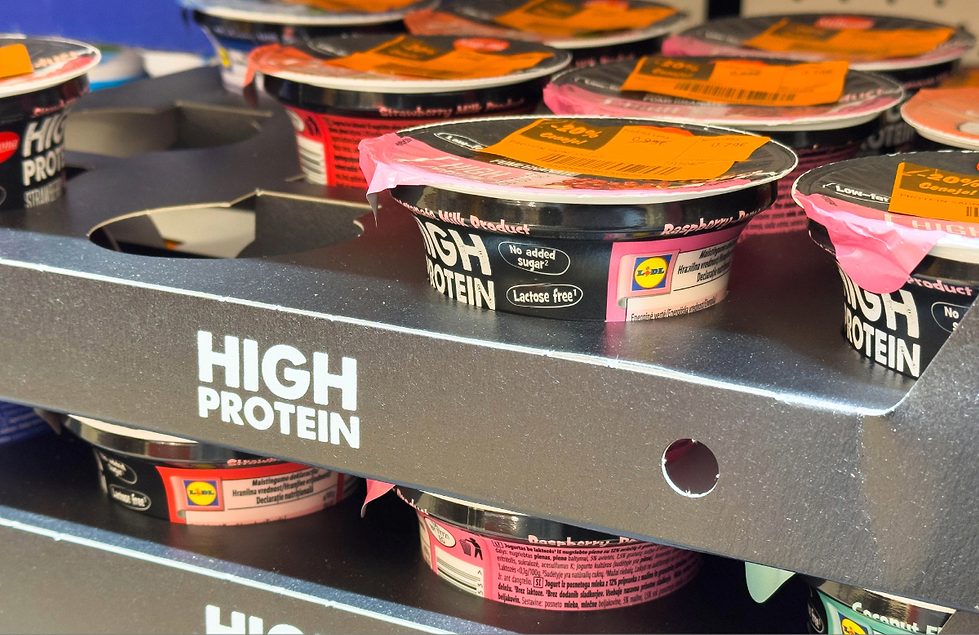
Despite these headwinds, demand fundamentals have held up better than expected, supported by nutrition trends and consumer habits that align well with dairy’s strengths. At the center of it all is protein. What was once a niche, fitness-driven focus has moved squarely into the mainstream, with dairy emerging as one of the biggest beneficiaries.
As more consumers prioritize protein, products ranging from ultra-filtered milk and drinkable yogurt to cottage cheese and grab and go snacks are seeing stronger demand. In McKinsey’s survey, nearly 90% of US dairy executives identified protein as the most influential consumer trend.

About 65% of US dairy executives cited sustained increases in raw materials and logistics as their biggest pressure points.
| Photo: ©VERVERIDIS – STOCK.ADOBE.COMThese new attitudes toward diet and nutrition have helped dairy commodities maintain value amid external volatilities. Demand for protein powders has surged in recent years and shows little sign of slowing. Cheese is a standout, supported by steady foodservice demand and its role as both an ingredient and a protein source. Butter, while more cyclical, has benefited from a broader move back toward simpler, less processed ingredients. Even with some price sensitivity, consumers have shown a willingness to stick with dairy and animal fats, particularly as preferences shift away from plant-based alternatives.
For processors, that resilience is translating into a more focused growth strategy. For example, Bel Brands broke ground on a $200 million expansion that will double production at its Babybel facility. Agropur has committed more than $130 million to projects focused on milk concentrates and whey processing. Schieber Foods is investing $132 million to expand yogurt production. The opportunity is less about broad-based expansion and more about targeting in-demand product growth. Innovation is centered on these value-added offerings like fortified beverages, high-protein snacks and products positioned around wellness and convenience.
Technology is expected to play a supporting role in that effort. McKinsey found that many dairy companies are implementing artificial intelligence and advanced analytics to improve efficiency. Adoption of these tools has so far been measured, but ideas were that they are gaining traction.
Meanwhile, in the United States, sustainability efforts have taken a back seat compared to European counterparts. European processors are leading the way on environmental initiatives, often driven by regulatory frameworks and customer requirements. In contrast, US companies are taking a more selective approach, with the survey showing sustainability ranking lower among top strategic priorities. Instead, many are focusing on initiatives that can deliver clear operational or financial returns, such as energy efficiency, waste reduction and water management. Even so, pressure from customers and export markets to demonstrate progress in sustainability persists.
According to the survey, US executives are cautiously optimistic. About 70% expect margins to improve, suggesting confidence that cost pressures may ease or that mitigation strategies will begin to take hold. Still, global supply, energy markets and shifting consumer behavior leave those gains far from certain.
#Protein #demand #helping #offset #dairy #cost #pressures
About the Author