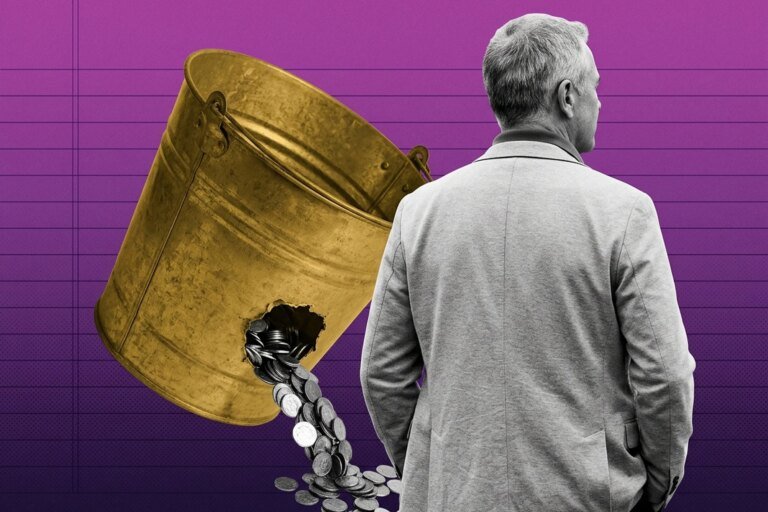
It can take multiple decades of earning, saving, and investing to end up with a $2 million nest egg. However, depending on where that money is kept, you may have to pay more than you think on Social Security taxes.
Up to 85% of your benefits may be eligible for taxation. Here’s what to know and why considering the taxes in your financial plan is so important.
Why big balances trigger the max
The IRS considers your combined income — your adjusted gross income plus nontaxable interest plus half of your Social Security benefit — when determining how much of your Social Security benefits are taxed. If it exceeds $34,000 as a single filer or $44,000 as a married couple filing jointly, up to 85% of your benefit may be taxed.
If you have all of your retirement funds in a traditional retirement plan, all of your withdrawals will count as ordinary income.
The RMD squeeze
A higher Social Security benefit generally reduces how much you have to withdraw from your retirement plan to cover living expenses, but required minimum distributions (RMDs) can force you into a higher tax bracket. Anyone who was born between 1951 and 1959 must take out RMDs at 73, while it starts at 75 for people who were born in 1960 or later.
The first year of RMDs can force a $75,000 withdrawal from a $2 million IRA. The IRS requires that you take out minimum distributions once you turn 73 or 75, depending on when you were born.
Not only can a high RMD make 85% of your Social Security benefits taxable, but that same withdrawal can push you into a higher tax bracket. Some people get caught by surprise when RMDs start, which can result in a higher tax rate than necessary.
The Medicare surcharge
The same income from a required minimum distribution can also boost your Medicare Premiums. Part B and D premiums are tied to income, and premiums will go up for 2026 the moment single filers cross $109,000 in modified adjusted gross income. The number is $218,000 for married couples filing jointly.
Taxable portions of your Social Security benefit will count toward your modified adjusted gross income.
What can help lower taxes
Taking action before RMDs start can minimize the tax impact, let you keep more of your benefits and keep Medicare premiums in check. Doing partial Roth conversions each year in your 60s can reduce your tax-deferred balance while growing a nest egg that will provide tax-free withdrawals when you want to tap into it.
Qualified charitable distributions can also help people who are 70 ½ years old. At that point, you can donate up to $111,000 per year directly from a traditional IRA.
It’s best to plan for your taxes ahead of time instead of waiting until your first RMD arrives. Being strategic about withdrawals and other strategies throughout your 60s lets you spread the tax impact instead of getting hit with big bills deep into your retirement years.
#Million #Saved #Social #Security #Taxed
About the Author