PURCHASE, NY. — PepsiCo Foods North America (PFNA) saw its top-line performance in the fiscal 2026 first quarter improve as innovation and affordability initiatives began to take hold, PepsiCo Inc. executives said.
Net revenue for PFNA, which includes Frito-Lay and Quaker Foods, grew 2% year over year to $6.33 billion in the quarter ended March 21, topping the 1.5% gain in the fiscal 2025 fourth quarter. Organic net revenue rose 1% on a 2% increase in volume offset by a 1% decrease in net pricing, marking a rebound from a 1% organic revenue decrease in the fourth quarter.
“PepsiCo is off to a good start this year, and we’re pleased with our first‐quarter results,” Steve Schmitt, chief financial officer for PepsiCo, said in remarks on the quarterly performance. “A key strategic objective entering this year was to improve PepsiCo Foods North America volume performance, and the business delivered 2% volume growth in the quarter.”
In salty snacks, volume improvements spanned brands and categories, said Ramon Laguarta, chairman and chief executive officer.
“During the quarter, large brands including Lay’s, Ruffles, Doritos and Cheetos each delivered volume growth, with volume share improvement in potato chips, flavored and unflavored tortilla chips, curls and puffs, pretzels and wavy grain chips (SunChips),” he said.
On the innovation front, Laguarta said PFNA has pushed ahead with its better-for-you product strategy, serving up items with cleaner ingredients, more fiber and whole grains, and extra protein.
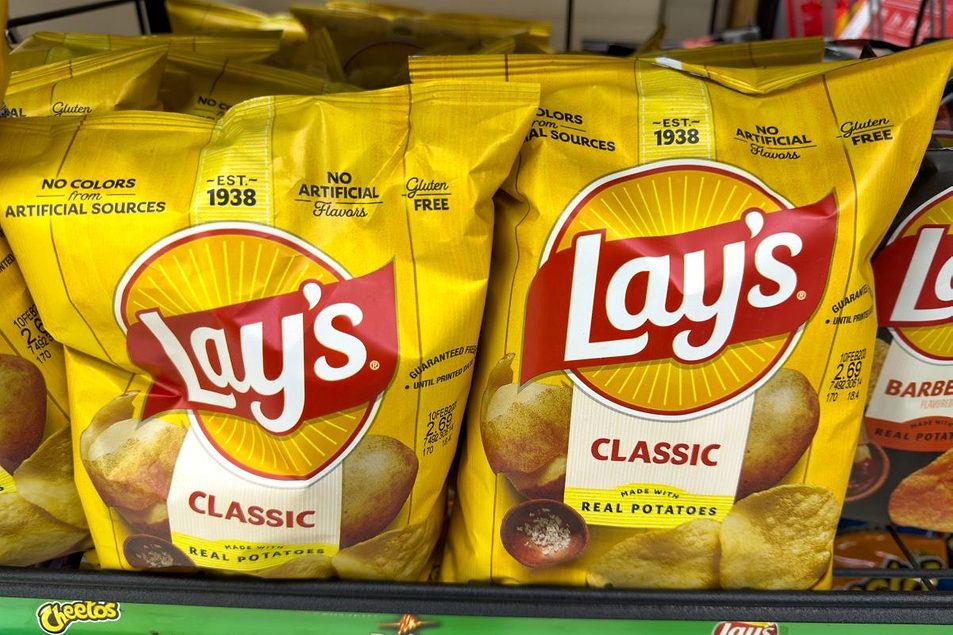
“We expanded the presence and distribution of Doritos and Cheetos NKD that contain no artificial colors or flavors and restaged Lay’s with new packaging and amplified communications that highlight simple, quality ingredients,” he said. “We continued to advance the $2 billion‐plus ‘permissible’ portfolio, with SunChips, Siete and Quaker rice cakes each gaining volume share and delivering strong volume and net revenue growth. We also offered more choices made with avocado oil, olive oil, fiber, whole grains or protein.”
Also, Laguarta said, “We recently introduced additional choices for consumers with protein, fiber and more diverse ingredients with the launch of Doritos Protein, Good Warrior beef sticks, Smartfood FiberPop and SunChips Fiber. We expect to expand the presence and distribution of new products as the year progresses and increase consumer engagement activities, such as the Lay’s sponsorship of the upcoming 2026 FIFA World Cup.”
Another key initiative for PFNA is “refreshing and restaging certain iconic brands” with new visuals, stepped-up communications and simpler ingredients, Laguarta said, citing Tostitos and Quaker. Looking ahead, the company also aims to advance innovation in emerging and functional spaces and extend “occasion‐led brand presence” into the away‐from‐home channel.
“The away-from-home business delivered volume and net revenue growth, aided by the continued growth of the Walking Taco platform and flavor solutions for prepared on‐the‐go foods in traditional retail stores with Flamin’ Hot and Cool Ranch varieties,” he said. “We also partnered with Subway Canada to introduce a one‐of‐a‐kind sauce inspired by flavor from our Ruffles All Dressed chip, demonstrating how we expand our brands through innovative culinary offerings.”
In an April 16 conference call with analysts on first-quarter results, Schmitt spotlighted PepsiCo’s aggressive strategy to bolster its food business.

PepsiCo said price investments, new flavors and better-for-you items have lured back shoppers who left its brands and attracted new ones.
| Photo: ©STOCK PLANET – STOCK.ADOBE.COM“For PFNA specifically, we’re going to continue to play offense,” he said. “We’re investing in value. We have exciting innovation. We’re supporting that with additional advertising and marketing, and we’re growing volume and sales.”
For example, besides Lay’s, Quaker also will be on the pitch at the World Cup, Laguarta said.
“We’re going to have Quaker participating in the event as well,” he said. “As the players walk into the stadium, the children will have the Quaker brand, and that’s going to be part of the restage of Quaker globally.”
Frito-Lay snacks like Doritos had taken a hit in the media recently from headlines decrying high per-bag prices in stores. But Laguarta noted PepsiCo’s value investments have gained traction and lured customers with stronger messages on affordability, as well as innovation.
“By optimizing the value in some of our multi-serve and multi-packs — in Lay’s, Doritos, Ruffles, etc., and also in Gatorade — we are bringing lapsed consumers back into the brand,” he explained. “These are consumers who had left the brand, either moved to stop buying the category or moved somewhere else.
“At the same time, consumers are coming into the category because of innovations like Naked or some of the innovation from Gatorade with no artificial (ingredients), low sugar. We’re seeing consumers that were not in the category but, because we’re offering solutions with no colors, no artificial colors, no artificial flavors, they’re coming into the category. So two types of consumers are coming into the category because of a stronger core and also innovation that drives incrementality to the category. And I think we’re going to continue to play both levers.”
PepsiCo’s ongoing productivity push has been pivotal in enabling cost savings to be reinvested in value and innovation, Laguarta said, noting the strategy has been executed across business segments “with rigor and a sense of urgency.”
“I don’t know if our competitors have the same productivity story, but we’ve been focused on reducing cost, cost per unit and overall cost for the food business, all the North America business and across the company,” he said. “That has been a very successful strategy for us. We still have a lot of non-executed drivers of productivity in the coming quarters and years that will help us continue to give consumers the right value and compete in a better way against other food manufacturers.”
#PepsiCo #strides #reenergizing #food #business
About the Author