KANSAS CITY — It looks to be a defining year in food ingredients.
Several definitions of ultra-processed foods — but none yet from the federal government — are swirling through the industry. Discussion centers around the qualifications and definition for naturally sourced colors. Studies, meanwhile, are more precisely defining what GLP-1 consumers want to eat and how they fall into different subgroups.
The US Food and Drug Administration in the July 25, 2025, Federal Register requested data and information to help develop a uniform definition of ultra-processed foods (UPFs), calling the Nova system developed by Brazilian researchers in 2009 the most common classification.
The Nova system classifies foods into four categories: unprocessed or minimally processed, processed culinary ingredients, processed foods and ultra-processed foods. Critics of the system say it only rates food based on the amount of processing and not nutrient density.
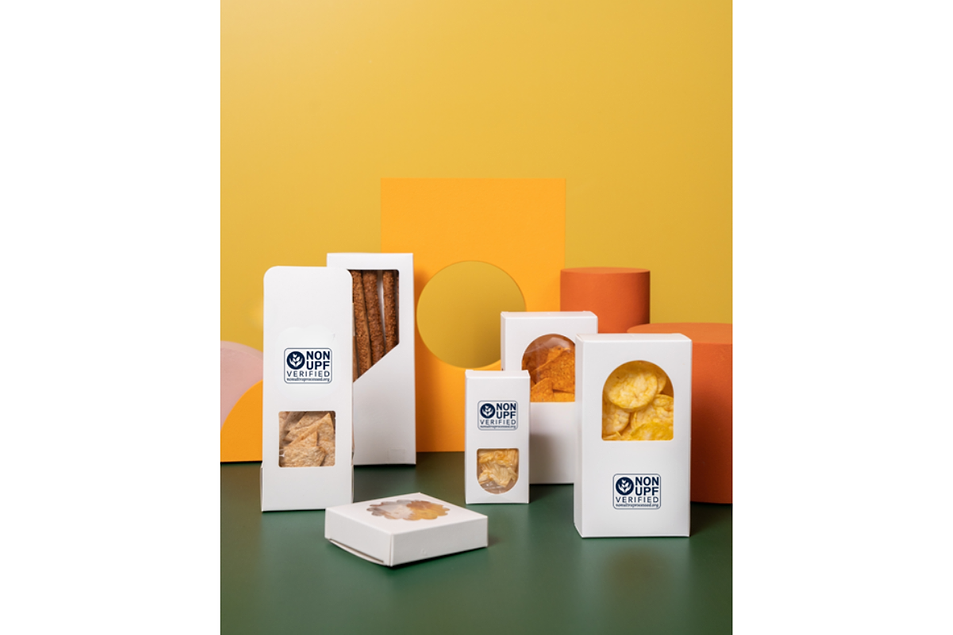
The Non-GMO Project, Bellingham, Wash., in November 2025 introduced its own Non-UPF Verified Standard, a third-party certification that defines which foods qualify as not ultra-processed and which foods do not qualify.
“This is about reconciling the false divide between ‘real food’ and packaged food,” Megan Westgate, chief executive officer and founder of the Non-GMO Project, said at the time. “Processing itself isn’t the enemy. It’s how and why it’s done that matters. The Non-UPF Standard defines a middle ground where convenience and nourishment can genuinely coexist, giving brands a path to make better food and shoppers a reason to trust it.”
California last September enacted the Real Foods, Healthy Kids Act, which sets a legal definition for UPF. Under the law, food is considered UPF if it is high in saturated fat, added sugar or sodium and contains a food additive such as a flavor, color, emulsifier or thickening agent. Earlier this year, Jesse Gabriel, an assembly member in California, introduced Assembly Bill 2244, which aims to create a state certification program for products that are not UPF.
Consumer understanding of processed food is improving. In a survey from the International Food Information Council, 39% of consumers in July 2025 said they could explain processed foods clearly (versus 30% in January 2024), 40% said they did not fully understand it (versus 48% in January 2024) and 21% said they could not explain it (versus 23% in January 2024).
Color concerns
The drive to remove artificial colors gained steam in April 2025 when the US Department of Health and Human Services, which includes the FDA, announced its desire to phase out all petroleum-based synthetic dyes from the nation’s food supply. Food companies and ingredient suppliers stepped up their efforts to find naturally sourced alternatives, which led to discussions about which colors qualify as naturally sourced.
The FDA in February approved the use of beetroot red as a color option and expanded the use of spirulina extract as a color option, including in baked foods.
“This is real progress,” Robert F. Kennedy Jr., secretary for the HHS, said at the time. “We are making it easier for companies to move away from petroleum-based synthetic colors and adopt safer, naturally derived alternatives. This momentum advances our broader effort to help Americans eat real food and make America healthy again.”
The effective dates for those two color options, however, were put on hold in March.
In comments sent to the FDA, GMO/Toxin Free USA, New Fairfield, Conn., objected to the ruling on beetroot red, a reddish-purple liquid powder that is produced by fermentation using a modified strain of the yeast Saccharomyces cerevisiae.
“While the attempt to shift the food industry away from petroleum-based dyes is commendable, replacing one synthetic food dye with another synthetic food dye is not acceptable,” GMO/Toxin Free said. “Under no circumstance should genetically engineered Synthetic Biology (SynBio) food dyes be allowed to be labeled as ‘natural.’ Further, no products made with SynBio food dyes should be allowed to claim ‘no artificial colors.’”

The Non-GMO Project now offers a Non-UPF Verified Standard certification.
| Photo: ©ANDROSOV858 – STOCK.ADOBE.COMObelisk Tech Systems Inc. objected to the expanded use of spirulina in comments to the FDA. Citing safety reasons, Obelisk Tech Systems said there is no cumulative dietary exposure model for “human foods generally” and that there was no specific analysis on cadmium (a heavy metal), despite its Group 1 carcinogen status under the World Health Organization’s International Agency for Research on Cancer (IARC).
Debate over colors continues in West Virginia as well.
The state on March 24, 2025, enacted into law HB 2354, which named seven color additives as “poisonous and injurious.” The colors are Blue No. 1 and No. 2, Green No. 3, Red No. 3 and No. 40, and Yellow No. 5 and No. 6. The law states that the sale of foods containing the colors will be prohibited for sale in West Virginia, effective Jan. 1, 2028. Also, a provision within the law said the colors should not be used as an ingredient in any meal served in a school nutrition program, which went into effect Aug. 1, 2025.
The International Association of Color Manufacturers filed a lawsuit seeking to overturn the West Virginia law. The association argued the law violates the equal protection clause and is a prohibited bill of attainder and unconstitutionally vague, in violation of the 14th Amendment of the US Constitution. The US District Court for the Southern District of West Virginia ruled in favor of the association on Dec. 23, 2025.
Analyzing GLP-1 consumers
Consumers taking GLP-1 medications differ on why they take the medications and which foods they choose, but they tend to have one common trait: spending less money at the grocery store and in restaurants. GLP-1 users are consuming 21% fewer calories and spending 31% less on groceries, according to an analysis from J.P. Morgan Global Research.
Morgan Stanley’s fourth AlphaWise survey projected a reduction of about 1.6% in total calories consumption (both GLP-1 users and non-GLP-1 users) by GLP-1 users in the United States by 2035.
The survey found that about 50% of GLP-1 users said they were reducing their caloric intake by 20% or more, either through eating fewer meals and snacks or eating smaller portions. Those with lower body mass index (BMI) were more likely to reduce intake through portion control, and those with a higher BMI drive were more likely to cut back in discretionary categories, including sweets and desserts and eating at restaurants.
“Net, we continue to view GLP-1 adoption as part of the broader health and wellness shift, representing an ongoing pressure point for food companies and underpinning our skepticism on center-store food stocks, though increasingly reflected in valuations and potentially more manageable over time,” Morgan Stanley said of the US food industry.
A Morning Consult survey of 58,008 US adults found that GLP-1 users are wealthier, better educated, more digitally engaged, more socially active, more politically engaged and more optimistic about the economy than the average American. The share of GLP-1 users earning over $100,000 per year was 31%, compared with 14% of all US adults, and 27% of GLP-1 users received a master’s degree, compared with 12% of all adults.
The convenience store channel could thrive among GLP-1 users due to its single-serve, portion-control outlet for snacks and indulgent items, according to Circana, a Chicago-based market research firm.
“(GLP-1) consumers shop convenience five times more than non-GLP-1 consumers,” said Sally Lyons Wyatt, global executive vice president and chief adviser of consumer goods and foodservice insights at Circana, at the 2025 NACS (National Association of Convenience Stores) trade show in Chicago. “(GLP-1 users) really don’t change that as they take the medications. That’s great news for this room and for this industry, that GLP-1 is not a killer of convenience. In fact, I would argue convenience is a big friend to GLP-1 consumers.”
ADM released research in 2025 from its Outside Voice unit that explored GLP-1 use in the United States, the United Kingdom, France, Germany and Spain. Thirty-seven percent of the GLP-1 users surveyed said they intentionally had increased their consumption of prebiotics and probiotics. Users of anti-obesity medications like GLP-1 medications said they were paying closer attention to aspects like added sugar content (64%), calories (60%), total carbohydrates (56%), protein content (55%) and fiber content (55%).
#waiting #game #continues #Food #Business #News
About the Author