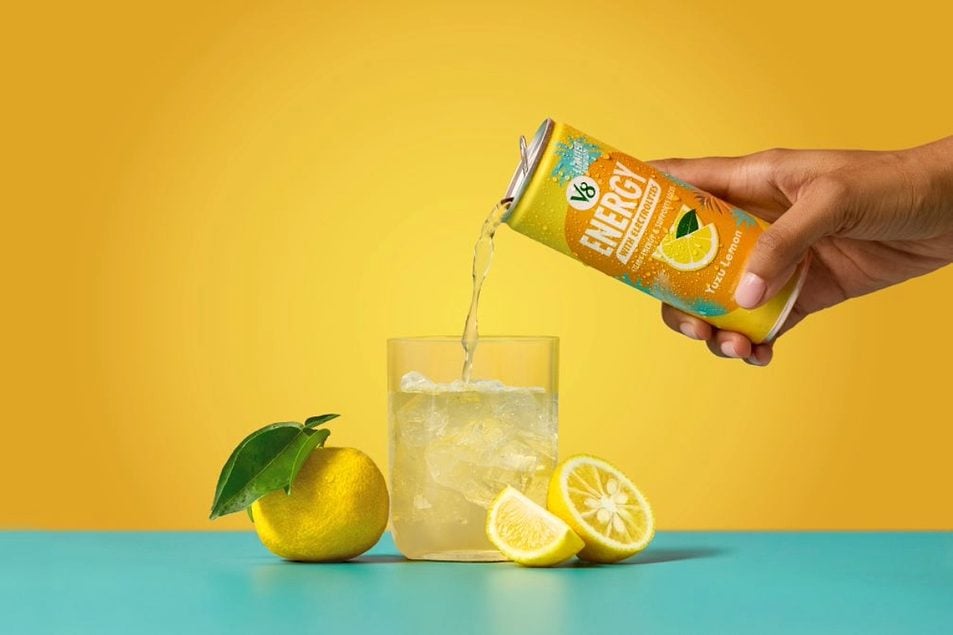
NILES, ILL. — Flavors increasingly are being used to communicate a functional beverage’s benefits before consumers read the label. For example, lavender and chamomile message calm, tart cherry and citrus-salt signal recovery, and ginger-lemon communicates gut health.
Understanding the cues can help brands and manufacturers more effectively position their products, according to a recent report from Imbibe, a flavor supplier and beverage development company.
Imbibe’s forecast used data from Google Search Trends, Mintel’s Global New Products Database and Keywords Everywhere, along with the company’s own insights, to identify seven “flavor territories” the company believes will define the next wave of beverage innovation.
The “territories” include dark and dramatic fruits, modern tropicals, acid-forward citrus, layered botanicals, earth-toned indulgence, “newstalgia,” and “swicy and swavory.”
Swicy, a portmanteau word combining “sweet” and “spicy,” showed the largest number of searches — up 359% year over year — the report said.
Next came newstalgia, defined as “nostalgic profiles reimagined as modular, remixable systems.” The forecast said searches for dirty soda, a non-alcoholic beverage formulated with a carbonated soda base and flavored syrups and some type of cream layered on top, were up 212% year over year.
Search volume is just one input Imbibe looks at, along with product launch activity, social media, flavor sampling and category movement, said Ilana Orlofsky, associate director of brand and communications at Imbibe.
Another is menu searching “because a lot of trends start in the kitchen,” she said. From there, beverage formats and how they’re being used are assessed, and “then we see it trickle down to products,” she added.
“When we see search, social and active projects and sampling, that really gives us the confidence that something is moving from curiosity to market relevance,” Orlofsky said.
Hybrid flavors gaining favor
Hybrid flavors continue to trend as consumers look to balance something familiar with something providing a sense of discovery, Orlofsky said. In the beverage category, that can mean mixing cherry and lime, for example, or developing globally inspired combinations such as yuzu (an East Asian citrus fruit) and vanilla.
Responding to the latter trend, Nespresso recently launched a limited-edition yuzu vanilla coffee pod, and Tom Holland’s Bero non-alcoholic beer brand recently introduced a limited-edition blackberry yuzu shandy product.
“Yuzu has had this meteoric rise in the past few years,” Orlofsky said. “We would see yuzu lime, but now it’s yuzu vanilla and creamy vanilla notes.
“We’re seeing that in a big way. It’s distinct, and it introduces consumers to new flavors in a way that seems a little more approachable.”
For consumer packaged goods (CPG) manufacturers and brands, the trick is balancing those familiar flavors consumers like with new and intriguing ones. It means flavor choices must be made since, as Orlofsky said, “you can’t be everything to everyone or you’re pleasing no one.”

Texture may begin trending in the ready-to-drink space as more innovators are adding ingredients like boba pearls.
| Photo: ©TINY SCREEN MEDIA – STOCK.ADOBE.COMOne way to balance novelty and familiarity in the beverage space is to introduce a familiar flavor in a different way, she said, recalling how she had encountered an Amass brand hydration mixer offering electrolytes and an intriguing flavor.
“It was kind of playing in the mocktail space, and the flavor was a salted grapefruit,” Orlofsky said. “I never really considered them together, but in a mocktail environment, that’s a little interesting.”
The result could be called “swalty,” another portmanteau word that combines “sweet” and “salty.”
Brands also can take a familiar flavor and put it in a different context, she said. One example is Hiball vanilla sparkling energy water, which combines two familiar attributes but in a new way.
“Vanilla is one of the most recognizable flavors, but have I ever seen it in an energy water? I don’t know,” she said. “That makes it feel fresh, and if it tastes good, people might try it.”
Moving beyond function
Imbibe works with clients looking to develop functional beverages but who also may be looking to incorporate additional on-trend categories. Orlofsky listed protein, hydration, gut health, beauty, energy, cognition, weight management and overall wellness as areas of increasing interest.
“Function is certainly one goal, but it’s not the only goal that we see,” she said. “I would say a big area that we see is sugar reduction.”
Another goal for beverage companies is transitioning to natural colors or to different ingredients, she said.
Two of the many large CPG companies recently switching out FD&C colors for naturally sourced options in their beverage products are The Campbell’s Co. with V8 Splash and Nestle USA with its Nesquik line.
What works and what doesn’t
To determine whether a new beverage concept has a chance of market success requires answering questions such as: what problem is it solving? Is the sensory experience strong enough? Does the flavor we’re working on really align with this brand?
“It’s generally not one reason that a product is successful,” she said. “It’s generally a few factors coming together at the right time.”
While some beverage flavors and formats haven’t found favor with consumers, Orlofsky said that doesn’t mean they couldn’t come back later.
“I don’t think anything is really off the table because trends are kind of cyclical, and an evergreen flavor can kind of show up and be given new life,” she said. “A flavor and a brand have to have a purpose. I have encountered some products where they are trying to do too much, and that’s sort of hard to survive, but I wouldn’t say anything is off the table.”
Orlofsky sees several beverage trends coming that will highlight functionality, hydration, protein, ingredients such as creatine, interesting flavors such as pandan, intriguing formats such as functional oral pouches and different textures such as ready-to-drink canned boba products.
No matter what combination of the trends beverages offer, it appears likely one element will dominate the others.
“Flavor is just doing a lot of work,” Orlofsky said. “It can signal function, can communicate indulgence, and it can drive trial and help a brand stand out in a crowded category.”
#flavors #driving #beverage #innovation
About the Author