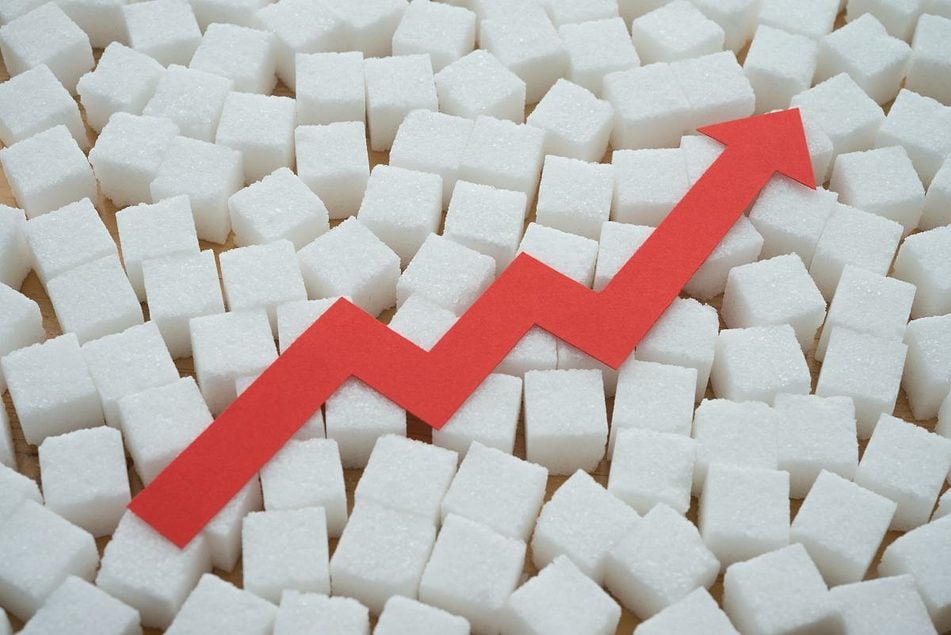
DENVER — Nearly a year after US Health and Human Services Secretary Robert F. Kennedy Jr., originator of the make America healthy again (MAHA) movement, declared a federal “war on sugar,” a new study from CoBank’s Knowledge Exchange suggests US consumer demand for sugar remains resilient.
Using data compiled by the US Department of Agriculture, the report found that sugar deliveries from mills to end users, including food manufacturers, wholesale grocers and distributors, increased 0.6% during the first half of the 2025-26 marketing year. Deliveries of high-fructose corn syrup (HFCS), meanwhile, fell about 3.5%, indicating continued consumer preference for natural sweeteners over more highly processed alternatives despite their potential economic advantage.
The USDA data showed the strongest delivery activity among wholesale grocers, jobbers, bakeries, and beverage and cereal manufacturers. Supporting that trend, Circana found that grocery store sales of desserts and sweet baked goods rose 1.2% in the past year through May, while sales of morning bakery products climbed 3.5%.
The gains came despite growing criticism of sugar from MAHA supporters and the rising use of GLP-1 weight-loss medications. The report found sugar’s status as a natural ingredient, rather than a highly processed sweetener like HFCS, has helped it maintain favor among health-conscious consumers and support demand.
That preference for natural products also has challenged artificial sweeteners, although the report noted that consumer attitudes toward those products have become more favorable in recent years and sales have continued to grow.

GLP-1 medications are poised to have the greatest impact on sugar consumption because they reduce overall consumption, and sugar remains deeply embedded across many food and beverage categories, according to CoBank.
| Photo: ©ANDREAS PROTT – STOCK.ADOBE.COM“While alternative sweeteners continue to gain some traction, natural sweeteners appear to have stronger long-term momentum,” said Billy Roberts, food and beverage economist with CoBank. “The US stevia market is growing rapidly as manufacturers increasingly incorporate it into dairy products, baked goods and other applications beyond traditional beverage uses. These trends suggest that consumers are not simply replacing sugar with artificial sweeteners, but gravitating toward products perceived as more natural.”
Still, the report cautioned that the sugar market’s resilience could come under pressure as consumers increasingly seek to reduce sugar intake and as a broader range of products and technologies becomes available to help them do so.
“For sugar producers, refiners and food manufacturers, the central question is no longer whether demand is stable today, but how emerging trends will reshape the market over the next decade,” Roberts said. “GLP-1 medications, in particular, are poised to have the greatest impact because they reduce overall consumption, and sugar remains deeply embedded across many food and beverage categories.”
The threat could intensify after the semaglutide patent expires in 2031, potentially paving the way for lower-cost generic versions that could broaden access to GLP-1 medications and accelerate their impact on food consumption patterns.
#Sugars #natural #halo #keeping #resilient
About the Author