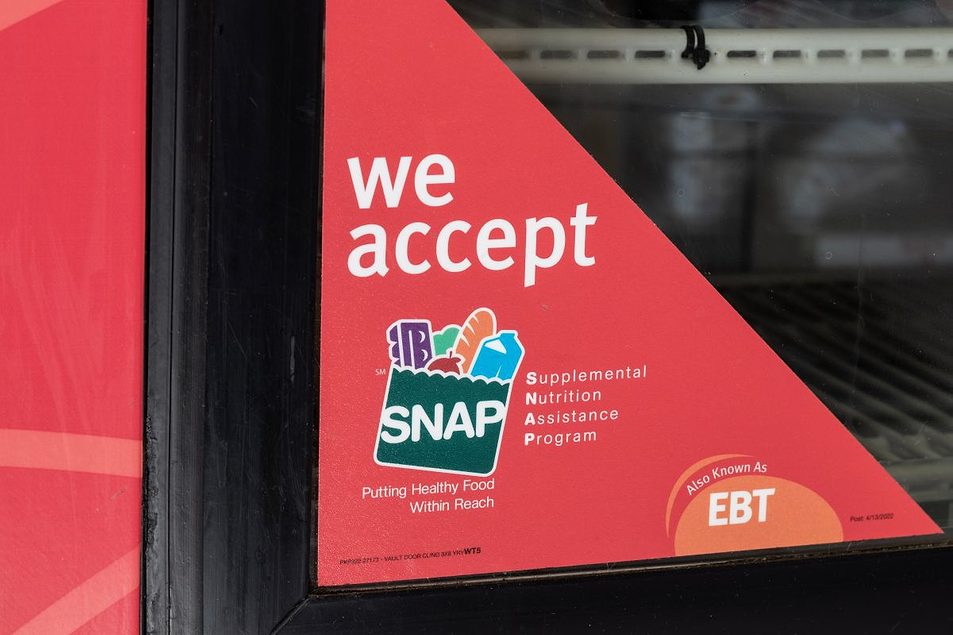
NEW YORK — Sales and volume growth of soda and candy are down in states cleared by the US Department of Agriculture to bar food and beverage products deemed “unhealthy” from being purchased via the Supplemental Nutritional Assistance Program (SNAP).
Through the end of March, eight states — Indiana, Iowa, Nebraska, Utah, West Virginia, Idaho, Oklahoma and Louisiana — had implemented SNAP restrictions on certain foods and beverages, primarily sugary drinks and candy. The waivers amend the statutory definition of food eligible for purchase under SNAP and expand the list of products excluded from the federal hunger-assistance program.
In the five states activating their SNAP restrictions on Jan. 1 — Indiana, Iowa, Nebraska, Utah and West Virginia — soda purchases by SNAP participants fell twice as much (down 15%) as those in states not excluding soda from the program (down 7.5%) through the end of March, according to Denver-based Ibotta. The CPG digital marketing firm said overall purchase volume in states with and without SNAP waivers showed a consistent pattern, indicating that changes in soda purchases likely came in response to the restrictions.
Ibotta also noted signs of increased value behavior, as soda purchases rose for 12- and 24-pack sodas but declined for 6-pack sodas, suggesting SNAP shoppers opted for lower-price-per-unit items.
Likewise, candy purchases by SNAP recipients in the states restricting them from the program since Jan. 1 (Indiana and Iowa) dropped more than twice as much (down nearly 20%) than those in states without the eligibility changes (down nearly 10%), Ibotta said. As with soda, candy purchase patterns in both state groups remained consistent and indicated the change in SNAP shopper behavior reflected the policy shift.
More restrictions upcoming
Currently, the USDA has approved 22 states for SNAP waivers. Texas put its waiver into effect on April 1, while Florida is slated to begin its SNAP restrictions on April 20. Colorado had scheduled its SNAP exclusions to start on March 1 but ended up delaying their implementation indefinitely.
Eight more SNAP waivers are scheduled to go into effect in 2026 (Arkansas, Tennessee, Hawaii, South Carolina, North Dakota, Missouri, Ohio and Virginia), followed by two more in 2027 (Kansas and Wyoming) and another in 2028 (Nevada).
“When additional waivers take effect in Virginia, Florida and Texas, brands could face material losses,” Ibotta said, noting the potential impact in highly populated states. “According to our receipt data, these states are Nos. 2, 3 and 4 in total soda consumption. As waivers continue to roll out, we expect to see further impact across energy drinks, juice, candy, confectionery and prepared desserts.”
Through early March, volume growth for SNAP-restricted states was down 3% year over year in soft drinks, 8% in chocolate candy and 3% in hard candy, according to a March 30 research note from TD Cowen analyst Robert Moskow. Those decreases were lower than the growth rates for the total population by 250 basis points in soft drinks, 210 basis points in chocolate and 320 basis points in hard candy, he said, adding that chocolate price hikes introduced in July 2025 may have exacerbated the impact.
Meanwhile, category volume for energy drinks — ineligible for SNAP purchases under some waivers targeting sugary beverages — were up 7% in the impacted states but trailed growth in the total population by 680 basis points.
“We analyzed early state-level data on SNAP restrictions for soft drinks and candy,” Moskow said in the research note. “The difference in the rate of volume growth between states with restrictions and the total population worsened modestly in the soft drinks, chocolate and hard candy categories in the year to date. The energy drinks category maintained strong volume growth year-to-date, albeit at a slower pace than the total population.”

By February 2028, SNAP food and/or beverage restrictions will be active in 22 states, representing over 40% of the US population.
| Photo: ©JETCITYIMAGE – STOCK.ADOBE.COMThe states implementing SNAP exclusions through March 1 represent 10% of the US population, but that percentage will jump to 26% by the end of April, when Texas and Florida — the No. 2 and No. 3 states by population — will have their waivers in effect, according to TD Cowen. When Nevada’s SNAP restrictions begin in February 2028, waivers will be active in 22 states, accounting for some 41% of the nation’s population.
“As SNAP restrictions have expanded to additional states, weekly data show increasingly consistent underperformance in soft drinks and candy categories,” Moskow explained. “Soft drink categories show low-single-digit to high-single-digit (growth rate) differences, while energy drinks have begun to post double-digit differences. Chocolate shows low-single-digit so far, but the overall equivalized volume trends are deteriorating. Non-chocolate CMG (candy, mint, gum) categories show low-single-digit to mid-single-digit differences.”
States vary in what’s “unhealthy”
Each state defined “unhealthy foods” differently in their SNAP waiver proposals to the USDA, resulting in some variation among restrictions, TD Cowen pointed out. All 22 states approved for waivers exclude soft drinks, and 14 states exclude candy.
Some states restrict “sweetened beverages” or “unhealthy drinks” from SNAP purchases, excluding not just soda but also fruit and/or vegetable juice depending on added sugar and natural juice content, as well as energy drinks and other beverages based on carbonation, sugar content and other ingredients.
Florida and Missouri bar “prepared desserts” from SNAP. Tennessee’s SNAP waiver bans purchases of certain “processed food and beverages” under the program. In December, Iowa modified its waiver to bar retailers from accepting SNAP EBT payments “for taxable food items (including candy, prepared foods, soft drinks and other sweetened drinks), except seeds and plants that grow food.”
“The definitions for the restricted categories vary across states,” Moskow said. “For example, some restrict beverages sweetened with sugar, while others use thresholds based on fruit juice content. Candy definitions also vary, in some cases depending on whether sugar is the first listed ingredient. These inconsistencies create operational complexity for manufacturers and retailers. Violations can result in loss of USDA authorization to accept SNAP benefits, requiring retailers to maintain robust systems and trained staff.”
#State #SNAP #waivers #snip #sales
About the Author