KANSAS CITY — Protein promotions are taking up more space in the snack category thanks to new product introductions, consumer surveys and the increasing use of GLP-1 medications. Dairy proteins and plant proteins are two options for adding protein to baked snacks.
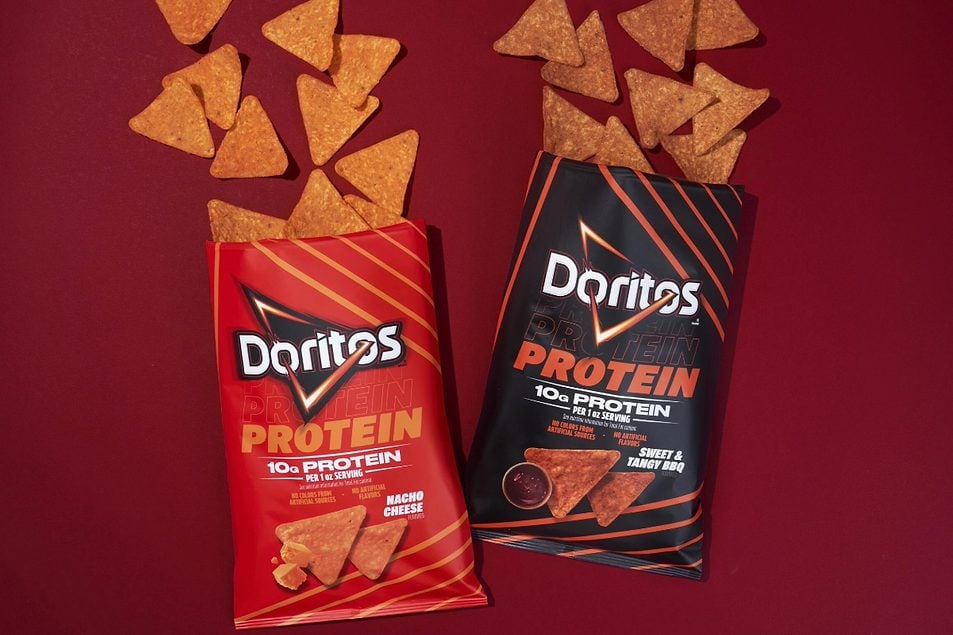
PepsiCo, Inc., Purchase, NY, in February launched Doritos Protein with 10 grams of protein per serving. Dairy-based protein (casein) is listed first on the ingredient list. Regular Doritos have 2 grams of protein per serving.
“This innovation underscores PepsiCo Foods’ commitment to evolving its portfolio to meet shifting consumer preferences toward foods with functional ingredients,” said Hernán Tantardini, chief marketing officer for, PepsiCo Foods US, at the time of the launch. “Seventy percent of consumers want their salty snacks to have protein, and now we are making it more accessible and seamlessly integrated into everyday snacking occasions without compromising the distinctive Doritos experience.”
The Kraft Heinz Co., Pittsburgh, recently introduced PowerMac, which is a version of Kraft Mac & Cheese with 17 grams of protein and 6 grams of fiber per serving. Sources of protein in the pasta include wheat flour, pea protein isolate and vital wheat gluten. Sources of protein in the cheese sauce mix include whey, milk and whey protein concentrate. The traditional Kraft Mac & Cheese contains 8 grams of protein and 1 gram of fiber per serving.
Dairy proteins, such as whey and casein, and egg proteins, such as ovalbumin and ovomucin, are considered complete proteins, meaning they contain adequate amounts of all nine essential amino acids.
Increased use of GLP-1 medication users has increased the demand for all food categories, including snacks.
“GLP-1 usage went from 10% to 18% of consumers, but 34% now say they intend to use the medications, and it’s already changing behavior,” said LuAnn Williams, co-founder and president of Innova Market Insights at the Future FoodTech conference held in San Francisco March 19-20. “Of people on the medications, 45% say they eat more vegetables, 42% say they have smaller meals, 40% have more protein and 30% have more fiber.”
Protein diversity
According to ADM’s Outside Voice research, globally 73% of plant-forward consumers (vegetarians, vegans and “flexitarians”) have tried plant-based protein in snacks, said Mike Medina, global category director for Chicago-based ADM. When specifically looking at the health and nutrition considerations in plant-based snacks, plant-forward consumers noted that they wanted to improve their overall health, eat less fat, manage their weight and increase overall protein consumption.
“This comes at a time when protein continues to be a top priority for consumers, with 66% globally looking to increase their intake,” Medina said. “Some even aim for 30 grams or more per meal — making it difficult to achieve.
“However, pulling from diverse protein sources can make a meaningful impact as consumers increasingly seek added protein content. For instance, soy, pea and wheat proteins are especially popular due to their clean taste, versatility and nutritional benefits along with other plant-based ingredients. Beans, pulses, ancient grains and seeds are gaining traction for nutrient density (protein, fiber, vitamins) and for aiding in unique texture and sensory experiences.”
Soy, meanwhile, is a non-animal protein with a protein digestibility-corrected amino acid score (PDCAAS) of 1.0, he said.
Another way to pack in more protein is to substitute refined wheat flour with nutrient-dense ingredients like chickpea flour that deliver both protein and fiber in a single ingredient, said Anke Golde, senior director, research and development at Denver-based Ardent Mills.
 Photo: PepsiCo Foods US
“Plant-based proteins continue to lead innovation, especially pulses like chickpeas and lentils,” she said. “Chickpeas are especially compelling as they contain roughly 19% to 25% protein and deliver a strong nutritional profile alongside functional benefits like emulsification and structure building.”
She added that concentrated protein ingredients like plant protein isolates or concentrates boost protein content without changing the product format.
“These concentrated protein ingredients can be added to doughs, fillings or coatings to support higher protein claims while maintaining a familiar eating experience,” Golde said. “Balancing these with starches and fibers helps manage texture and keeps the final product appealing.”
Working within the system
When incorporating protein into snacks like crackers, chips and extruded puffs, the challenge is not just adding protein, said Chad Rieschl, a principal scientist for Minneapolis-based Cargill. The protein must work within the system.
“In many cases, that means using different protein formats alongside functional ‘helper’ ingredients like starches,” he said. “These supporting ingredients are especially useful in extruded snacks, where starches play a critical role in maintaining expansion, texture and even flavor.
“From a formulation standpoint, protein should be incorporated directly into the dough matrix. As it’s introduced, hydration becomes a key consideration since proteins compete with starch for water. This often requires adjustments to water levels, as well as modifications to mixing and baking conditions to prevent products from becoming too dense or tough. When working with plant proteins, it may be necessary to blend different protein sources to create a ‘complete protein’ for labeling claims.”
In traditional baked foods applications like cookies or crackers, Cargill starts by rebalancing the flour system itself, which may include using lower-protein flour to improve texture and pairing it with vital wheat gluten, which typically contains a minimum 70% protein, he said.
“It’s also possible to boost protein in the salty snack space,” Rieschl said. “For example, in developing a high-protein tortilla chip prototype with 10 grams of protein per serving, we found that blending multiple Puris pea proteins, including one originally designed for beverage applications, was key to achieving the right balance of flavor, texture and processability.
“When we experimented in the puff snack space, it was the helper ingredients’ turn to shine. To create a whole grain puff with 8 grams of added protein, finding the right starch solutions proved critical, supporting texture, expansion and flavor. Even without seasoning, the puff delivers a clean taste.”
#Pump #protein #snacks
About the Author