
KANSAS CITY — Strength in the dairy powders markets has become one of the defining features of the current dairy complex, with nonfat dry milk (NDM) and whey values supported by firm demand, tightening supplies and a wave of investment in processing capacity.
The NDM markets have been driven by a sharp rally in CME spot values alongside elevated futures. CME spot nonfat dry milk climbed from roughly $1.68 per lb in early March to above $1.90 per lb by late March, with trades reaching as high as $1.94 per lb during the month. More recently, prices have continued to push higher, with US Department of Agriculture Dairy Market News reporting spot NDM reaching $2.11½ per lb during the week ended April 10.
The strength reflects a combination of tightening inventories and sustained demand, both domestically and abroad. US NDM and skim milk powder exports have been a consistent outlet, with Mexico anchoring demand as the largest buyer, accounting for roughly half of US NDM exports. Southeast Asia also has been an active destination, supporting steady export flows.
At the same time, the National Dairy Products Sales Report (NDPSR), which feeds into Class IV pricing, has lagged spot values. The widening gap between CME and NDPSR pricing has created a strong incentive for processors to maximize powder output.
Ideas were that processors are effectively purchasing milk based on lower NDPSR-derived values while selling finished powder at significantly higher CME-linked levels, capturing a substantial margin in the process. In recent weeks, that spread has approached 50¢ per lb.
“That’s 10 times more motivating than the change in make allowance,” said Robert Smith, vice president of sales and trading at Clofine Dairy & Food Products, Inc.
Smith was referring to recent changes to Federal Milk Marketing Order (FMMO) pricing that were intended to better reflect rising costs for labor, energy and plant operations. More specifically, he was referring to higher allowances that increase the credit processors receive for manufacturing dairy products. In theory, the adjustments could improve returns on products like nonfat dry milk and incentivize additional output. In practice, however, market participants said the changes have had little influence on production decisions.
Mike Brown, vice president of dairy market intelligence at T.C. Jacoby & Co., said the updated framework “provided more room for margins under regulated pricing,” but added that impacts on production and product mix are “probably minimal at best.”
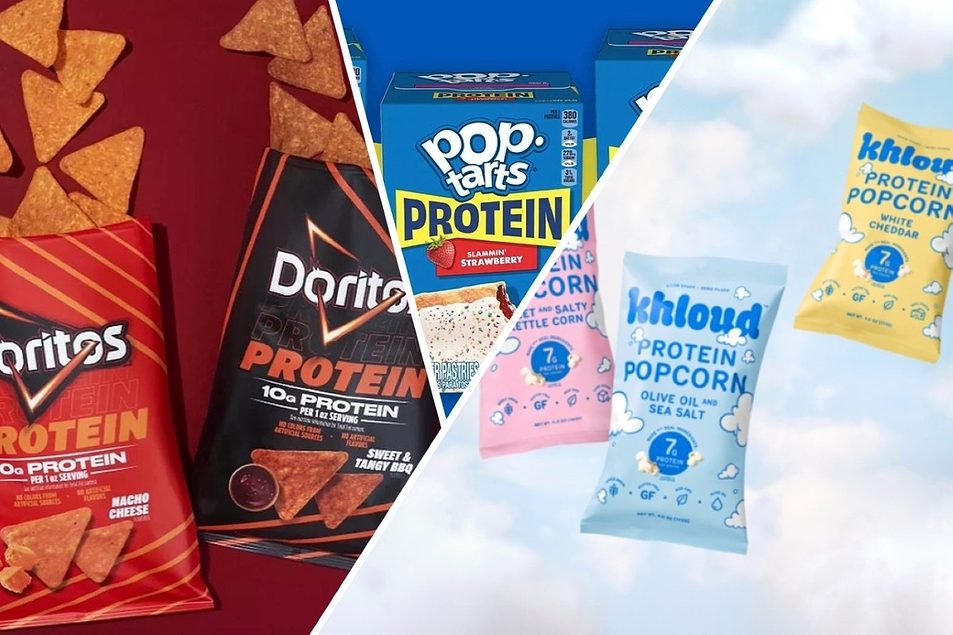
Demand fundamentals are driving incentive and increasingly reshaping the industry’s physical footprint. Consumer appetite for protein continues to accelerate, with about 70% of Americans actively trying to increase protein intake, according to CoBank.
That demand is extending well beyond traditional dairy categories. Dairy-based ingredients are being formulated into protein bars, beverages and functional foods, creating sustained pull for milk powders and whey products across a wide range of applications.
The result is not just stronger pricing, but structural change. US dairy processors are investing more than $11 billion in new and expanded manufacturing capacity, with a significant share tied directly to ingredients and powders. The buildout reflects expectations that protein demand will be a primary driver of growth.
Meanwhile, supply-side data underscores how tight the powders market has become. USDA data showed manufacturer-held NDM stocks totaled about 214.8 million lbs in January, down sharply from more than 300 million lbs at the start of 2025. Production also softened, with US NDM output at 144.8 million lbs in January, down from 154.7 million lbs a year earlier.
The combination of lower output and tightening inventories has helped sustain upward momentum in prices, even as milk production trends higher seasonally.
As a result, processors with the ability to shift output are prioritizing higher-value protein streams. Facilities capable of upgrading whey into whey protein concentrate (WPC 80) or whey protein isolate (WPI) are capturing significantly greater returns than those producing commodity dry whey.
Still, the shift is not without constraints. Capacity limitations in both milk protein and whey processing are a factor, preventing the industry from fully capitalizing on strong market signals, at least in the near term. In many cases, the current investment cycle is aimed at relieving those bottlenecks.
Butter-powder plants play a central balancing role in this environment. Unlike cheese facilities, which are typically designed to run at full capacity, powder plants adjust output based on available milk supplies. Their ability to store product for extended periods also provides flexibility in managing supply fluctuations.
Looking ahead, the trajectory of powders will depend on demand sustainability and how quickly new capacity comes online. If protein demand is strong and price spreads persist, incentives to maximize powder and protein output are expected to continue. For now, the powders market is firmly supported by fundamentals such as tight stocks, steady exports and expanding protein demand.
#Protein #boom #powering #dairy #powder #market #dynamics
About the Author