Unlock the Editor’s Digest for free
Roula Khalaf, Editor of the FT, selects her favourite stories in this weekly newsletter.
The oil market will lose at least 1bn barrels of crude and refined products due to the war in the Middle East, even if the conflict ends tomorrow, the head of the world’s biggest independent oil trader has warned.
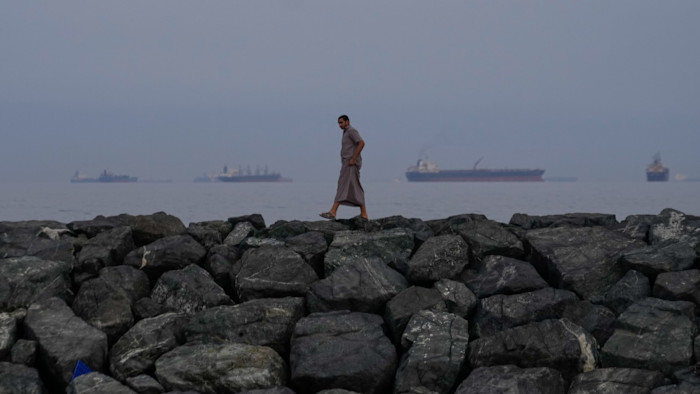
Russell Hardy, who has run Vitol since 2018, said the attacks on energy infrastructure in the Gulf and the closure of the Strait of Hormuz had resulted in the loss of roughly 12mn barrels of oil production per day since the US and Israel first bombed Iran at the end of February.
“In round numbers, the 1bn [barrels] is baked in now because we have probably lost 600mn to 700mn at this stage, but by the time things get moving again, if they get moving again, it takes time to bring all [the shut or damaged infrastructure] back,” Hardy told the FT Commodities Global Summit in Lausanne.
Hardy said the war was without doubt the biggest disruption in energy markets in his almost 40-year career, eclipsing the smaller and shorter shock in 1990 after Iraq invaded Kuwait.
“That had a lot of the same aspects in terms of refinery outages, crude oil outages, but it wasn’t on the same scale and, unlike today . . . the market was smaller and there was more spare [production] capacity,” Hardy said. “Today, all of the spare capacity is behind the Strait of Hormuz, so the impact is obviously very direct.”
At the FT conference, commodity traders have repeatedly warned that the fallout from the closure of the Strait of Hormuz is far from over, even if the White House and Iran can agree a deal in the coming days.
Traders have warned of global food shocks due to low supplies of fertiliser following the loss of Middle East gas supplies and a slowdown in copper mining due to the loss of sulphuric acid from the Gulf, while the risk of energy shortages increases with every day the strait remains closed.
The loss of 1bn barrels is equivalent to roughly 10 days of global oil consumption and more than double the quantity released from strategic reserves in a bid to mitigate the impact on energy supplies.
Hardy was one of several senior oil traders and analysts at the FT conference to sound an alarm over the huge loss of supply, the effects of which are at present being felt most acutely in Asia, Africa and Australasia.
Gunvor chief executive Gary Pedersen warned of serious “ramifications” from the Strait of Hormuz’s continuing closure. “When you shut down that much energy through that supply chain for this long and potentially longer, the ramifications of this are real,” he said.
Frederic Lassere, head of research at Gunvor, predicted that the war would trigger a global recession if the Strait of Hormuz was not reopened by the end of July.
“If we don’t get a reopening [of the strait] in three months’ time then this becomes a macro issue where the world falls into recession,” he said.
Lasserre was speaking alongside Saad Rahim, chief economist at Trafigura, who agreed that an estimated 1bn barrels of oil production had already been lost.
“I think we’re at a very critical inflection point,” he said, referring to planned peace talks between the US and Iran due to be held in Pakistan. “I think if there is a ‘resolution’ of this, whatever that looks like, [and the situation] does start to normalise, I think we have just about dodged a bullet.”
However, Rahim and others were sceptical of the capacity of the US to reach an agreement that leads to the swift reopening of the strait.
Helima Croft, head of global commodity strategy at RBC Capital Markets, said US equity markets were trading close to all-time highs in part because traders had wrongly bet on a swift resolution. “I think there’s also this bet that President [Donald] Trump could just sit in the White House and bring this to a close,” she said. “People keep saying, ‘well, he can Taco’, but again it takes two to Taco,” she added, referring to the acronym Trump Always Chickens Out, a reference to the president’s frequent policy U-turns.
“It’s not single decision maker dynamics,” she continued, noting that there was no guarantee how Iran would approach the negotiations. “Everyone acts like [Trump’s] the only one driving this bus at this point.”
In a best-case scenario in which 50 per cent of traffic through the Strait of Hormuz has returned by the end of May, the market will still have lost 450mn barrels of clean refined products, such as diesel and gasoline, according to Amrita Sen, director of market intelligence at Energy Aspects. Unless high prices crushed demand, such a large amount of fuel would not be replaced until at least 2030, given there was no spare capacity in the global refining sector, she said.
#Oil #market #lost #billion #barrels #due #Iran #war #Vitol #boss #warns
About the Author