PURCHASE, NY. — Innovation efforts in food and beverages set the tone for a solid fiscal 2026 start as PepsiCo Inc. beat Wall Street’s high-end forecast for earnings and revenue in the first quarter.
For the 12-week quarter ended March 21, net income climbed 27% to $2.33 billion, equal to $1.70 per share on the common stock, from $1.83 billion, or $1.33 per share, a year earlier. Excluding restructuring/impairment and acquisition/divestiture-related charges and mark-to-market net impact, core net earnings were $2.2 billion, or $1.61 per share, versus $2.03 billion, or $1.48 per share, a year ago, Purchase-based PepsiCo said. Analysts’ top-end estimate was for adjusted earnings per share of $1.56.
Total net revenue for the quarter rose 9% to $19.44 billion from $17.92 billion a year ago and was up 2.6% on an organic basis. At the high end, analysts had projected revenue of $19.21 billion.
“PepsiCo delivered strong results for the first quarter of 2026,” Ramon Laguarta, chairman and chief executive officer, said in remarks on the quarterly performance. “Net and organic revenue growth accelerated sequentially for the International and North America businesses.”
A 9% gain in core EPS reflected record productivity savings, while at the top line, each business segment generated organic growth, including the 20th straight quarter of at least mid-single-digit organic revenue growth for the International unit, Laguarta said.
“We believe the commercial actions in place to improve performance aided results, including the restaging of certain global brands, an expansive slate of innovation with emerging and functional offerings, and improved affordability initiatives in certain areas of the portfolio,” he said.
In North America, the beverages segment led the way in the first quarter. Revenue for Pepsi Beverages North America (PBNA) surged 9% year over year to $6.39 billion. Organically, revenue grew 2% on a 6% increase in net pricing and a 4% decrease in volume.
“Acquisitions, net of divestitures, contributed 7 percentage points to net revenue growth, reflecting the distribution of Alani Nu (energy drinks) and the acquisition of (prebiotic soda brand) poppi, partially offset by the transition of the case pack water business in North America to a third‐party partner and the divestiture of (energy drink) Rockstar,” Laguarta said.
“Functional hydration offerings delivered strong performance as they continue to resonate well with consumers,” he noted.
Gatorade generated volume, net revenue and unit share growth in the quarter, fueled by Gatorade Zero Sugar and Gatorlyte.
“In addition, we are restaging Gatorade products with improved/simplified visuals on packages, more brand communication on hydration benefits and product superiority attributes and gradually removing artificial colors within the portfolio,” Laguarta said.
Propel hydration beverages kept up revenue and unit sales growth as well as gained volume share in enhanced water, he said, adding that the brand’s retail sales have more than doubled since 2019 to over $1 billion. PepsiCo also successfully integrated the fast‐growing Alani Nu brand into the direct-store delivery system via its partnership with Celsius Holdings, he said.

PepsiCo said investments to make its food products more affordable lifted quarterly results.
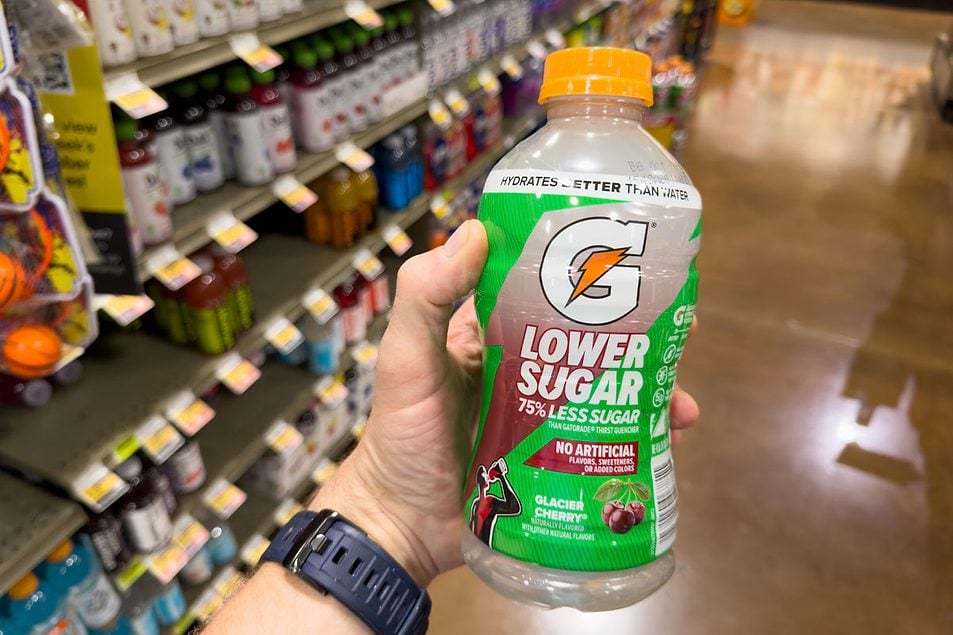
| Photo: ©JETCITYIMAGE – STOCK.ADOBE.COM“Looking ahead, we expect to expand the presence and availability of on‐trend innovations recently introduced — including Pepsi Prebiotic, Gatorade Lower Sugar, a newly formulated Muscle Milk, Starbucks Coffee & Protein, Pure Leaf Mental Focus and Dirty Mountain Dew Cream Soda — and amplify communications with consumers as the year progresses,” Laguarta said.
In PepsiCo Foods North America (PFNA), which includes Frito‐Lay and Quaker Foods, first-quarter net revenue rose 2% to $6.33 billion and was up 1% on an organic basis, improving from a 1.5% revenue increase and a 1% decrease organically in the previous quarter. The first-quarter organic revenue uptick reflected a 2% volume gain and a 1% net pricing decline.
“PepsiCo Foods North America delivered both volume and net revenue growth in the first‐quarter as the business implemented affordability investments and brought more innovation into the marketplace,” Laguarta said.
He cited brand refreshes for Tostitos and Quaker and the launch of better-for-you products such as Doritos Protein, Good Warrior beef sticks, Smartfood FiberPop and SunChips Fiber, which — along with Lay’s sponsorship of the 2026 FIFA World Cup — should provide a bigger lift for PFNA going forward.
“In addition, we will continue to reduce costs and drive operational excellence, with a focus on ensuring that key metrics such as service levels, order fill rates and costs per unit show further improvements,” Laguarta said. “Savings will help fund commercial activities and brand communications that aim to accelerate growth. Therefore, we continue to expect PFNA’s performance to improve in fiscal 2026.”
PepsiCo upheld its previous fiscal 2026 outlook, which forecasts core constant-currency EPS to grow 4% to 6% and organic revenue to rise 2% to 4%.
“As we look ahead, the macroeconomic environment has become more volatile and uncertain because of ongoing geopolitical conflicts,” said Steve Schmitt, chief financial officer. “Systematic commodity hedging programs for market traded commodities are expected to provide some near‐term protection and visibility on certain input costs. With this in mind, we are affirming fiscal 2026 financial guidance. Our assumption is that our business can mitigate the impact of certain cost pressures that may persist.”
#Innovation #stirs #firstquarter #momentum #PepsiCo
About the Author