COLORADO SPRINGS, COLO. — Bakery slightly lags behind overall food and beverage sales growth as demographic and economic undercurrents reshape the way US consumers engage with the category, said Anne-Marie Roerink, president of food market research firm 210 Analytics.
“Baked goods are trailing the total store a little bit in terms of dollar and unit volume,” Roerink said in an interview at the 2026 American Bakers Association (ABA) Convention in Colorado Springs. “And while many point to GLP-1s, I think it’s one of many reasons we’re seeing some pressure on baked good sales.”
Total bakery sales for the four weeks ended March 29 were down 1.7% in dollars and 4.7% in units year over year, compared with overall food and beverage sales growth of 2.8% in dollars and 1.3% in units, according to the March 2026 ABA Bakery Playbook, based on Circana multi-outlet retail sales compiled by 210 Analytics.
For the latest 52 weeks through March 29, bakery sales edged up 0.7% in dollars but dipped 1.4% in units versus growth of 2.3% in dollars and 0.5% in units for total food and beverage in the 2026 first quarter.
“There are two sizable undercurrents in the marketplace right now: the economy, and what I call the demographic tidal wave,” Roerink said. “The economy is driven by higher-income consumers, who are feeling comfortable financially. They are still buying the way they’ve always bought — in fact, they’re probably leaning into baked treats and at-home meal occasions a little more. This is driving the higher-end, higher-quality, gourmet side of the business. And then we have people who are truly financially pressured. They’re struggling to make ends meet, and that is driving a lot of growth in private label at the moment.”
Generational transition
On the demographic front, baby boomers’ status as the dominant grocery shoppers has faded, altering purchasing dynamics in bakery and across the store, Roerink said.
“They’ve been the majority shopper for 30 years, but what is happening is that by sheer age, household size, etc., their growth is starting to level off,” she explained. “So what we’re seeing in a lot of categories that were boomer-dominated — take bread, for example — is that spending in terms of unit growth is flat because boomers are not earning more and not needing more. Their household sizes are not getting bigger, and they’re on fixed incomes.”
Activity in the flatbread and traditional bread segments illustrates the demographic impact on bakery. Millennial and Gen Z consumers grew up when low-carb diets, global cuisines and handheld foods were popular, and these shoppers have gravitated toward tortillas, wraps and flatbreads — a category with double-digit sales growth — rather than conventional loaf bread, which have experienced slack sales, according to Roerink. Tortillas/flatbreads also recently have seen strong growth among boomer and Gen X consumers, who are increasingly focused on health and diet, she added.
“Then if you look at bread, you think about your traditional peanut butter and jelly sandwich or just having a sandwich for lunch every day, or maybe even having a bread product at breakfast,” Roerink said of boomers’ bread-related eating habits. “But that’s not how a lot of the Gen Z and millennials tend to approach the category.”
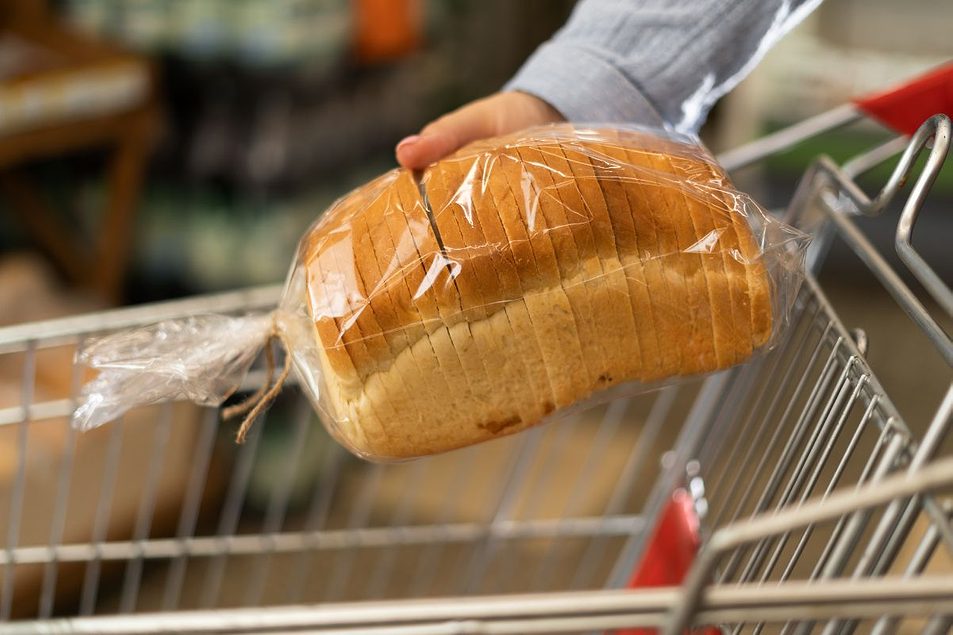
The latest numbers bear that out. In March, aisle bakery sales for tortillas/wraps climbed nearly 15% in dollars and 8% in units, whereas center-store bread sales declined 1.2% in dollars and 3.5% in units. Bagels/bialys sales fell more than 15% in dollars and units, while English muffins dipped 0.5% in dollars and dropped 7% in units. Buns and rolls aisle sales were flattish for the period, up 1.4% in dollars but down 0.7% in units.

“Baked goods are trailing the total store a little bit in terms of dollar and unit volume,” Anne-Marie Roerink, president of 210 Analytics, said in an interview at the 2026 ABA Convention.
| Source: Sosland Publishing Co.Other categories figure into the equation as well. Surging ground beef sales, traditionally tied to sales of buns and rolls, also are now lifting tortilla sales as millennials and younger consumers partake in taco nights, Roerink said. Conversely, declining lunchmeat sales are impacting purchases of packaged sliced bread.
“There are many reasons that the boomer dollar is now flat or down,” Roerink said. “If it’s down, that means somebody else has to offset that spending. So in categories that are doing really well, you see Gen Z and millennials’ spending come up really strong and offsetting that decline caused by the boomers. In categories that are struggling, the growth in those younger generations is not offsetting the loss that we’re seeing from the boomer generation.”
Financial squeeze
Meanwhile, elevated food inflation post-pandemic has forced many shoppers to make budgetary trade-offs as pricing levels now stand some 40% higher since 2019, Roerink noted. In bakery, center-store price per unit through the end of March stood at $3.51, up 3% from a year ago and up 5% from three years ago. The perimeter bakery price per unit was $4.56, up 1.8% year over year and up 3.3% versus three years ago. That compares to a total food and beverage price per unit of $4.33, up 1.5% from a year ago and up 6% from three years ago.
“It is about the total basket,” she said. “Whereas pre-pandemic a cartful of groceries was maybe $99, now it’s $140. That prompts overall behavioral changes. Budgeting doesn’t target baked goods, but it is a rebalancing and a recalibration of the total food budget.”
Lower-income consumers are optimizing their bakery spending via mix shifts toward mainstream brands, private labels and smaller pack sizes, according to the Playbook analysis. Roerink cited items like snack cakes, which offer an inexpensive indulgence in individual package sizes, plus smaller-package bread, which enable shoppers to buy a sufficient quantity without wasting slices. Frozen baked foods — up 2.1% in dollar and 8% in pound sales in March — also offer many shoppers good value and no waste, she said.
“What frozen foods do better than anything else is provide an opportunity to have something in the freezer as a backup and also not have anything go to waste,” Roerink explained. “There’s also that demographic tidal wave I mentioned. Interestingly, the core frozen food consumer is the older millennial. Boomers grew up during a time when frozen food maybe wasn’t seen as healthful or not as good or fresh.”
Today’s K-shaped economy also is reflected in bakery sales, as higher-income consumers are able to regularly splurge on fresh-baked bread items and baked treats in the perimeter and lower-income shoppers reserve fresh bakery spending for special occasions, seasonal purchases and sometime treats. Over the 52-week period through March, perimeter bakery sales rose 2.8% in dollars and 0.8% in units year over year, while aisle bakery sales declined 0.9% in dollars and 2.7% in units.
“We see overall the fresh perimeter bakery outperforms center-store bakery,” Roerink said. “When people engage with the perimeter bakery, it tends to be for holidays and celebrations. The research found that those are important times to splurge a little. We see a typical cookout basket including some premium rolls from the perimeter bakery, for instance. Those premium items are driven by the occasional splurge and that higher-income household who is still driving a lot of the growth. We see that very much in the numbers.”
#Consumer #engagement #baked #foods #shifting
About the Author