KANSAS CITY — Snacks are no longer just snacks. Consuming snacks as a meal replacement has continued to grow in popularity, signaling a change from the traditional role of snacking as a quick bite between meals, according to data from the market researcher Circana.
“Today’s consumers expect snacks to fulfill many roles without compromise, including function, fuel and fun,” said Sally Lyons Wyatt, global executive vice president and chief adviser at Circana. “They want multifunctional snacks that balance nutrition, convenience, and enjoyment while fitting seamlessly into diverse moments, from meal replacements to on-the-go lifestyles.”
Within the snacks market, the better-for-you category has been a primary driver of growth. Circana found that 64.1% of consumers said they actively look for snacks perceived as “good for them,” representing a 7.4% increase since 2020. Additionally, better-for-you snacks have outpaced all other snack segments the company tracks in dollar share and unit share over the last few years, with dollar sales rising 5.3% and unit sales increasing 2.3% in 2025, according to data presented at a session during the 2026 Sweets & Snacks Expo held in Las Vegas from May 18-21.
The definition of better-for-you has shifted over the past several years to focus less on the reduction of negative attributes and more toward a focus on added benefits, including high protein or fiber, said Sophie-Géraldine Delanoe, global segment leader, marketing food and nutrition, Roquette, Lille, France.
“The better-for-you category is undergoing a transformation,” Delanoe said. “It is now as much about adding in beneficial ingredients as it is reducing or removing undesirable ones, including excessive sugar, unsustainable ingredients and artificial additives. Consumers are increasingly looking for snacks that truly deliver on nutritional value, rather than simply being lower in calories.”
Buffing up BFY with protein
Protein remains the dominant force in the better-for-you snacking category. High protein claims are especially popular with consumers, as protein content can aid in driving satiety and delivering sustained energy throughout the day. Sales for snacks with 20 or more grams of protein rose 19%, according to data from SPINS for the 52-week period ended March 22, 2026. Snacks with 10 to 19 grams of protein saw an increase of 13% in sales over the same period, while sales for snacks with less than 10 grams of protein rose just 3%.
“Protein fortification continues to be a major driver for many consumers, and there is ongoing opportunity with plant-based sources such as soy, pea and wheat alongside diverse ingredient systems that include beans, pulses, seeds and ancient grains, which offer both nutritional value and formulation flexibility,” said Mike Medina, global category marketing director at ADM, Chicago. “Plant-based proteins and ingredients are especially relevant.”
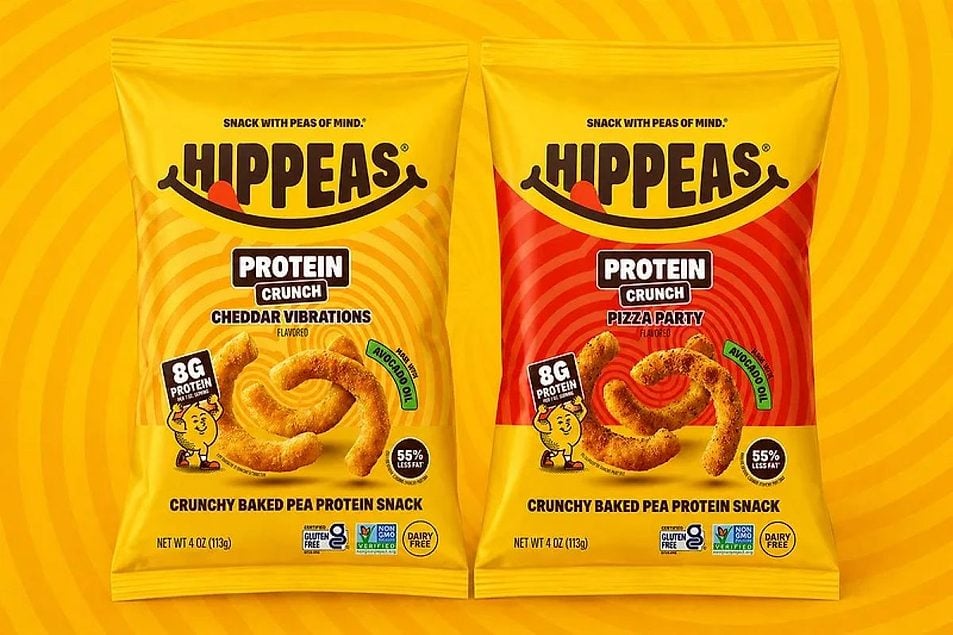
New York-based Hippeas is one manufacturer capitalizing on the plant protein opportunity. The company recently debuted its Protein Crunch plant-based line at the 2026 Sweets & Snacks Expo. The baked puffed snacks are formulated with olive oil and contain 8 grams of pea protein per serving.
“We’re obsessed with peas and challenged ourselves to create a snack that delivers serious crunch and big flavor with double the protein of our original puffs,” said Nick Marmet, vice president of marketing at Hippeas. “Protein Crunch is our answer: a next-generation puff that brings the texture people crave together with plant-based protein, all in a way only Hippeas can.”
Mondelez International, Inc. brand Perfect Snacks is putting “a new twist on the traditional protein bar” with its Protein + Prebiotics refrigerated bar line. The bars are formulated with quinoa and honey, and each serving contains 20 grams of protein and 6 grams of prebiotic fiber.
“People shouldn’t have to sacrifice quality when choosing a high-protein snack option,” said Cara Liebrock, chief executive officer of Perfect Snacks. “With Protein + Prebiotics, we set out to prove that high-protein bars can be made with simple, recognizable ingredients. As more people prioritize protein in their everyday routines, we’re delivering an option that they can feel good about while upholding the quality, freshness and nutrition standards that define Perfect Bar.”

Adding protein to some baked snack applications can create issues with leavening of gluten-development, and moisture content can pose texture and stability difficulties.
| Photo: ©FOTOFABRIKA – STOCK.ADOBE.COMFormulating for protein claims can pose certain challenges, however. For instance, some protein ingredients often contain bitter flavors or off-notes that can negatively influence the taste of a manufacturer’s product, necessitating the use of masking and modulation technologies to preserve a pleasant eating experience, Medina said.
Heidi Geisenhoff, senior product strategy manager, dairy nutrition at Glanbia, Chicago, explained that protein also can create issues with leavening or gluten-development in baked snack applications, and moisture content may pose texture and stability difficulties.
“Moisture balance is also critical, as proteins bind water and can lead to drier products and a shorter perceived shelf life if formulations aren’t properly adjusted,” she said. “These challenges make ingredient selection especially important.”
Fiber in the spotlight
Fiber too has gained momentum with both manufacturers and consumers, becoming a close second priority to protein due to its associated benefits with digestive wellness, blood glucose management and balanced energy, Delanoe said.
“Fiber is also becoming increasingly important to consumers, as they become more aware of its functional benefits,” Delanoe said. “In addition to digestive wellness and wider advantages related to good gut health, fiber can help maintain texture and mouthfeel in applications like bars, cookies and baked snacks.”
SPINS data identified that snacks with 6 to 9 grams of fiber experienced the biggest sales growth among snacks with fiber claims, rising 7% across multi-outlet channels for the 52-week period ended March 22. Fiber-forward offerings in the crackers and granola bars cateogries saw the largest increase in repeat purchases during the same period, up 26% and 116%, respectively, versus one year ago.
Functional foods company IQBar is producing a better-for-you snack for consumers interested in fiber and protein content. The company’s peanut butter and jelly protein bites feature 5 grams of protein and 5 grams of fiber per serving, and the product is intended to deliver the nostalgic flavor combination of peanut butter and jelly.
“With protein and fiber top of mind for today’s consumers, we saw an opportunity to reimagine a nostalgic favorite in a format that delivers real nutritional value,” said Will Nitze, chief executive officer and founder of IQBar. “Our PB&J protein bites combine the familiar flavor people love with the brain-boosting benefits we’re known for, all in a portable, on-the-go snack.”
Part of the emphasis on protein and fiber content in the better-for-you space comes as manufacturers are paying greater attention to the rising consumer use of anti-obesity medications (AOMs) such as GLP-1s, Medina said. He explained that ADM’s research found 43% of US consumers are interested in snacks positioned as “GLP-1” friendly, and that attributes such as added sugars, caloric content, total carbohydrates, protein and fiber are those that receive heightened attention from AOM users.
In addition to their specific nutrient requirements, many GLP-1 users are focused on reduced portions, making better-for-you snacks an ideal candidate for such consumers.
“There is a growing focus on ‘portion-smart’ innovation, where snacks deliver more nutrition in smaller serving sizes, particularly as GLP-1-related eating behaviors influence the market,” Delanoe said. “As such, GLP-1 users are increasingly seeking smaller, nutrient-dense snacks that provide fullness, balanced energy and nutritional value within reduced portion sizes. Adapting to these evolving needs, manufacturers are increasingly incorporating complementary ingredients, such as whole grains and targeted micronutrients, to support a more holistic wellness positioning.”
Medina said reduced sugar content marks another major attribute within better-for-you snacks. The emphasis on sugar reduction has required manufacturers to employ alternative sweetening systems derived from natural sources that can maintain texture and taste, he explained, while avoiding the pitfalls of lower sugar formulations.
“Reducing sugar… can negatively impact not only sweetness but also structure, mouthfeel and shelf stability, requiring formulators to rebuild these attributes through carefully designed holistic ingredient systems,” he said.
#Breaking #betterforyou #snacking #opportunity
About the Author