
PARMA, ITALY — The Barilla Group said it has improved the nutritional profile of its entire portfolio without compromising taste, according to its 2025 sustainability report “Our Sustainability Stories,” issued in May 2026.
Of all the Barilla products sold in 2025, 89% contain no more than 5 grams of sugar per serving, 90% contain no more than 0.5 grams of salt per serving, and 90% “provide a source of sugar,” according to the company.
“Our relationship with food is changing, alongside the way we live,” Barilla noted in the report. “Today, people look to balance flavor and tradition with greater attention to nutrition, safety, environmental impact and accessibility. And food must at the same time nourish, bring enjoyment and fit seamlessly into modern lifestyles. Delivering on these expectations means finding new solutions for tasty, high-quality products made with ingredients from increasingly sustainable supply chains.”
In terms of supply chain progress, Barilla discussed how slightly shrinking its Tagliatelle packaging has led to the reduction of 150 tonnes of packaging material and 20% lower carbon dioxide emission from transport.
“…the design of Barilla’s Tagliatelle packaging was revisited through close collaboration between the packaging team and the pasta product development team,” Barilla said. “By adjusting the shape of the pasta nests, it became possible to reduce the size of the box itself.”
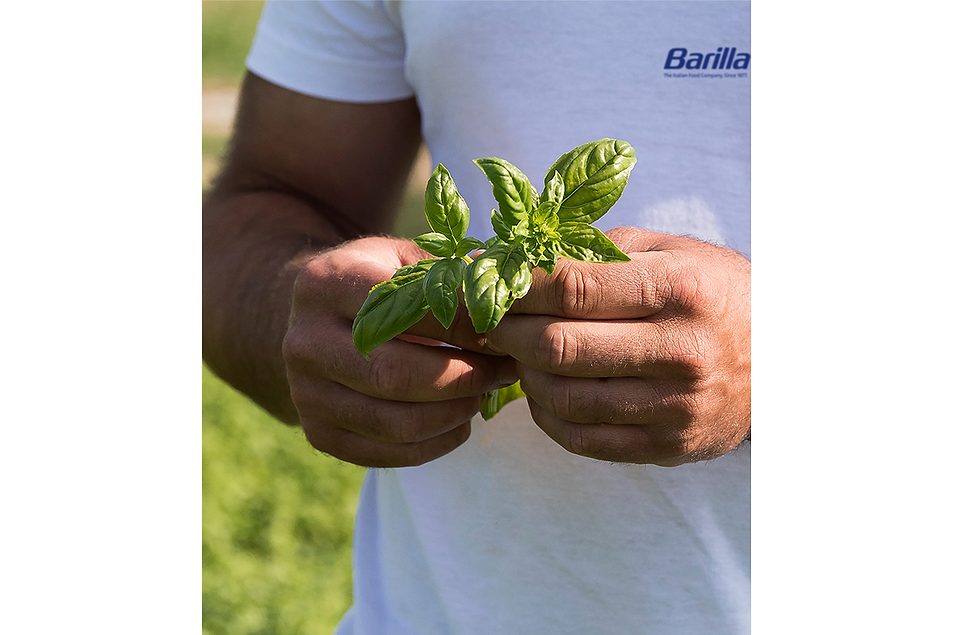
Barilla also detailed its regenerative agriculture progress, specifically its Carta del Mulino initiative. Founded in 2018, Barilla has used this sustainable disciplinary to cultivate soft wheat for its Mulino Bianco brand. As of 2025, Carta del Mulino features 1,855 farmers cultivating more than 256,000 tonnes of soft wheat with assistance from 14 milling partners and around 70 storage centers across Italy.
“Compared with conventional cultivation systems, Carta del Mulino approaches have contributed to a 10% annual reduction in CO₂-equivalent emissions, corresponding to around 9,000 tons of emissions avoided each year,” the report said.
In an effort to create a more inclusive supply chain, Barilla increased the share of its procurement spend for inclusive suppliers from 0.6% in 2020 to 3.42% in 2025.
“Talent, innovation and entrepreneurial energy exist everywhere,” Barilla said. “Yet many smaller or diverse companies face structural barriers when approaching large organizations — from limited networks and visibility to the complexity of corporate procurement systems. Supplier Business Development helps bridge this gap. The program actively identifies inclusive suppliers and creates opportunities for them to engage with Barilla’s procurement teams.”
Regarding environmental change throughout 2025, Barilla has invested €30 million ($34 million) as part of its five-year plan to invest a total of €168 million in its production sites for improved energy efficiency and renewable electric energy systems. Barilla also increased the installed photovoltaic capacity of five production sites — five in Italy and one in Greece — to more than 8 megawatts, more than four times higher than their 2022 capacity.
“The transition toward more sustainable production rarely happens overnight,” said Paolo Federici, technical development vice president of the Barilla Group. “It is a long journey to be built through consistent steps — each investment and improvement contributing to a broader transformation.”
#Barilla #improves #portfolios #nutritional #profile
About the Author