
KANSAS CITY — Consumers are showing interest in hybrid meat alternatives, products containing both animal- and plant-based protein, an approach that may lead to health and sustainability benefits.
“Hybrid and blended protein products are a strategic win for developers,” said Stephanie Kreke, market development manager – protein for Chicago-based ADM. “They capture new consumer segments while streamlining formulations to deliver high protein content with the taste and texture shoppers crave. Blends of animal- and plant-derived proteins allow consumers to explore alternative options without abandoning their dietary habits — effectively lowering the barrier to entry and driving category growth.”
Globally, 68% of consumers said they were interested in trying blended or hybrid foods and beverages, according to ADM’s Outside Voice market research, while 86% said it’s healthier to get protein from a variety of sources and 82% said they believe products that combine plant and animal proteins are healthier.
Tim Dale, director of category innovation for Food System Innovations, is the author of a “State of the category, 2025” report on balanced protein. Food System Innovations, a philanthropic organization that invests in a humane and sustainable future of food, defines balanced proteins as meat and poultry, dairy, egg or seafood products that substitute at least 30% of the animal-based ingredients for ingredients sourced from plants, cultivated animal cells and/or microbial fermentation.
The report said livestock production uses nearly 80% of agricultural land and an estimated 24% to 32% of agricultural water, making balanced proteins a more sustainable choice. Balanced protein products in some cases have outperformed conventional meat in blind taste tests, and they are closing the price gap to conventional meat, according to the report.
Balanced proteins also may reduce saturated fats and cholesterol in products. Dale pointed to Nutrition Facts Panels from the Better Meat Co. The 100% ground beef product had 8 grams of saturated fat, 70 mg of cholesterol and zero grams of fiber per 100 grams. Replacing 33% of the beef with the Better Meat Co.’s mycelium-based ingredient Rhiza altered the nutrition profile to 5 grams of saturated fat, 50 mg of cholesterol and 3 grams of fiber. Replacing 50% of the beef with Rhiza changed the figures to 4 grams of saturated fat, 35 mg of cholesterol and 5 grams of fiber.
Market potential
FSI partnered with Schaefer, a food and beverage market research company, and found the balanced meat and poultry category reasonably may capture about $5.3 billion in the United States, or about 2% of the total US meat market, based on consumer demand and manufacturing capabilities. When it comes to demographics, Gen Z, millennials and households with children are more likely to be open to balanced proteins.
“In the US, many successful retail examples lean into a ‘stealth-health’ positioning,” Dale said. “Perdue Chicken Plus is a strong example: a familiar family favorite that delivers ¼ cup of vegetables per serving in a dino nugget format. For parents looking to avoid mealtime battles but improve child nutrition, this is a clear and compelling reason to buy.”
ADM’s research showed consumers prefer a more meat-to-plant ratio in hybrids.
“These consumers are intrigued by blends that include plant proteins, mushrooms, vegetable blends, beans and pulses,” Kreke said. “Hybrids that combine multiple protein sources — be that plant-plus-animal, plant-plus-plant or plant-plus-fermentation — opens the door for expanded options that satisfy multiple consumer demands at once, including an improved sensory experience, superior nutrition and protein diversity.”
The inclusion levels of plant-based proteins vary based on the specific standards of identity required for the targeted meat product.
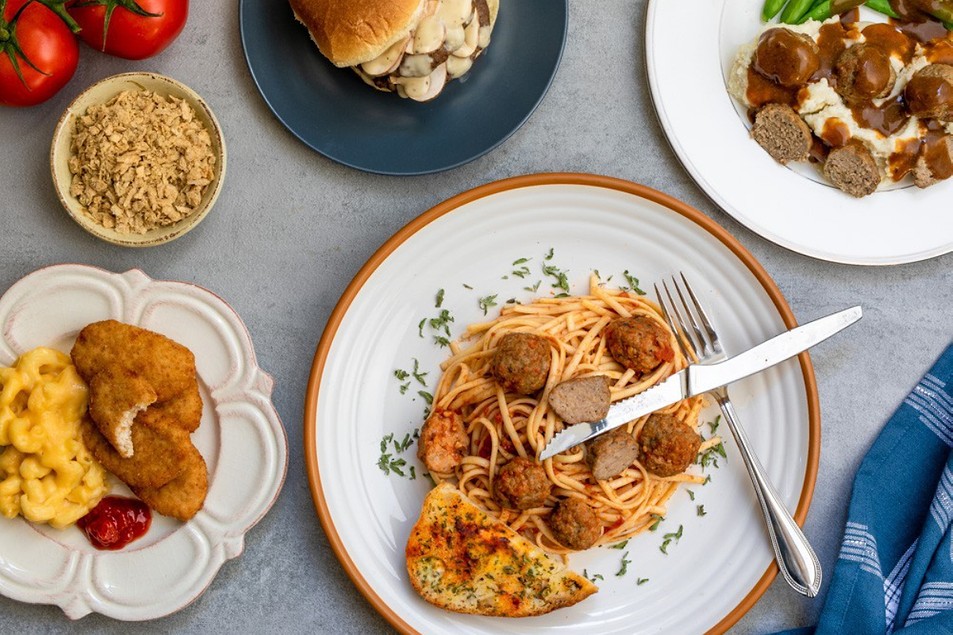
“For instance, meatballs provide a versatile format for hybrid inclusion without necessitating changes to traditional naming conventions,” Kreke said.
Achievable hybrid ratios vary by product format and shelf-life requirement, said Garrett McCoy, senior manager for research, development and applications at Corbion, Lenexa, Kan.
“Ground and formed items like burgers, meatballs, sausages and crumbles can often reach higher plant inclusion, including 50:50, because the structure is more forgiving and can be stabilized with process and formulation controls,” he said. “Whole-muscle-style products generally support lower plant replacement since maintaining uniform safety and shelf-life performance becomes more challenging.”
Many plant proteins have a higher pH than meat.
“That higher pH can create a more favorable environment for microbial growth, and it can also shift spoilage patterns,” McCoy said. “Higher plant inclusion can also sometimes change how the product oxidizes, which may increase the need for oxidation control. For these reasons, higher-ratio hybrids typically require tighter refrigeration control, validated antimicrobial hurdles and antioxidant strategies to maintain consistent shelf life.”
Flavor and texture
Minneapolis-based Puris offers pea proteins for use in plant-based meat alternatives and hybrids.
“Pea protein consistently stands out as one of the best performing plant proteins in hybrid meat products because of its neutral flavor, good texture contribution and compatibility with animal proteins,” said Tyler Lorenzen, chief executive officer of Puris. “Research and commercial formulation work also point to soy, wheat and sunflower proteins, but pea is often preferred.”
A 50:50 blend of pea protein and animal protein, particularly whey, may be achieved.
“From a nutritional perspective, this combination works extremely well, allowing formulators to maintain a complete protein score of 1.0 while delivering balanced essential amino acids,” Lorenzen said. “Market dynamics are also playing an important role. The whey protein market is highly cyclical, and we are currently seeing tight supply conditions, with many whey products sold out or priced at a premium. This makes hybrid formulations especially attractive, as blending whey with pea protein can help stabilize costs while maintaining performance.”
Dale said every plant-based ingredient brings distinct functional and sensory attributes.
Whole vegetables work well for family-forward and minimally processed positioning. Mycelium offers high-protein density with neutral flavor and functional texture. Mushrooms like shiitake enhance umami and provide juiciness. Soybeans and peas provide protein fortification, and strong supply chains support them.
“The beauty of the category is that balanced proteins are not one formula,” Dale said. “They are a product design framework. Ingredient selection should begin with the consumer and the problem being solved.”
#Blending #animal #plant #proteins #innovation #strategy
About the Author