KANSAS CITY — Precision fermentation in whey protein, ingredient innovation in plant protein and a surge in casein are impacting the sports nutrition category, which continues to expand in interest among mainstream consumers.
“Sports nutrition is no longer limited to athletes,” said Thibaut Elijah Lafargue, head of marketing and communications at Verley, a French biotechnology company. “It is increasingly targeting active lifestyle consumers, with products positioned around overall health, weight management and long-term wellness.
“At the center of this shift is protein itself. It is no longer seen as a niche performance ingredient but as a core building block of everyday nutrition, supporting muscle maintenance, metabolic health, satiety and healthy aging. This is why protein is now appearing across a much broader range of products, far beyond traditional sports nutrition, and becoming a key component of daily diets for a wide population.”
Verley offers dairy proteins developed through precision fermentation that are stable, digestible proteins with 11% more leucine than native whey protein, according to the company. Traditional dairy proteins often don’t perform well under heat, acidic conditions and nutrient-dense formulations, according to the company, and plant-based alternatives lack essential amino acids.
“Whey protein has long been a cornerstone of sports nutrition due to its role in muscle recovery and performance,” Lafargue said. “However, whey is not a single protein, but a mix of several proteins. Among them, beta-lactoglobulin (BLG) is the most functionally and nutritionally relevant fraction. Thanks to precision fermentation, we are able to produce pure BLG directly, with a high level of control over its quality and performance.
“This is particularly important because BLG combines high leucine content, essential for muscle protein synthesis, with strong digestibility, making it highly efficient for both recovery and everyday active nutrition.”
Precision fermentation offers a more efficient and sustainable way to produce the proteins, he said.
“In conventional dairy, proteins are obtained through what is often referred to as ‘milk cracking’: Milk contains only around 3.3% protein, of which roughly 40% is whey, meaning large volumes must be processed to extract relatively small amounts of target proteins,” Lafargue said. “By contrast, precision fermentation enables the direct production of the target protein, significantly reducing resource use.”
Verley’s independently conducted, peer-reviewed life cycle assessment (LCA) showed that the company’s precision fermentation process led to 72% lower greenhouse gas emissions, 81% less water use and 99% less land use.
Last year Verley received a “no questions” letter from the US Food and Drug Administration on the generally recognized as safe (GRAS) status on two of its ingredients.

Data from Innova Market Insights show that 40% of Gen Z consumers increased their consumption of sports and functional nutritional beverages over the past year.
| Photo: PurisProtein quality
Instead of focusing solely on “how much” protein, consumers should not overlook “what kind and when,” especially in recovering from workouts, said Floor van der Horst, global marketing director, performance and active nutrition for FrieslandCampina Ingredients, Amersfoort, The Netherlands.
“Today’s athletes and active consumers are far more intentional about their protein intake,” she said. “Yet this intent is still largely focused on quantity over quality or timing. In this context, whey protein has emerged as the default solution for many. The category leader for decades, whey’s continued popularity is down to its fast-digesting properties, which allow consumers to support muscle growth and repair quickly around workouts. This immediacy fits perfectly with busy, on-the-go lifestyles, where convenience and efficiency are key.”
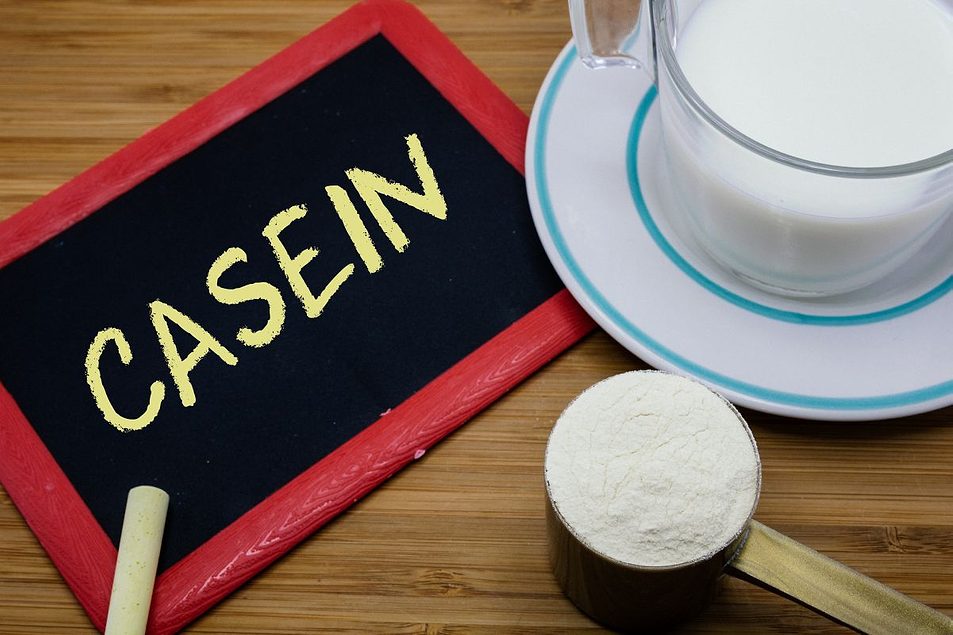
Interest is growing around casein, van der Horst said.
“As consumers become more educated, they’re adopting more structured, goal-oriented approaches to their nutrition — thinking beyond a single shake or serving and instead considering how products fit into their broader daily routine,” she said. “Casein appeals to this mindset, as its slower digestion rate makes it well suited to longer recovery windows, such as overnight or between meals.
“This reflects a wider trend in sports nutrition: a move toward more personalized, time-specific solutions that support recovery across the entire day — not just immediately after a workout.”
Whey and casein perform differently in formulations, van der Horst said. Casein has a naturally stable structure, which means it holds up well during heat processing and maintains its quality on more demanding applications.
“However, it doesn’t dissolve as easily in acidic environments, so it needs careful handling to ensure a consistent, stable end product,” she said. “On the other hand, whey is more sensitive to heat and can thicken or change texture when processed at higher temperatures, which can make certain applications — like long shelf-life beverages — more complex to get right.”
Besides protein, creatine, beta-alanine and emerging peptide ingredients are trending in sports nutrition as they support muscle recovery and growth for athletes and fitness enthusiasts, said Nora Khaldi, PhD, founder and chief executive officer of Nuritas, New Canaan, Conn. The company’s bioactive peptide ingredient has been shown to increase muscle protein synthesis and energy while reducing muscle breakdown, exercise-induced inflammation and myostatin (a hormone that limits muscle growth), according to the company.
Pea protein for beverages
Turning to pea protein, Minneapolis-based Puris recently launched ClearP for transparent protein beverages. The ingredient may be used in sports drinks that add hydration benefits, products fortified with protein that are less heavy and less filling, and products that refresh and do not coat, according to Puris, which added that since whey supply is tied to cheese production, availability depends on the dairy market.
Puris also pointed to data from Innova Market Insights showing that 40% of Gen Z consumers said they increased their consumption of sports and functional nutritional beverages over the past year, which compared to 36% for millennials, 29% for Gen X and 28% for baby boomers.
Roquette, Lille, France, offers plant-based proteins, too.
“Dairy proteins remain widely used in sports nutrition, but plant-based proteins are increasingly chosen for lifestyle, ethics and tolerance reasons, expanding the category beyond traditional athletes,” said Jiae Kim, global segment leader, marketing and nutrition for Roquette. “Pea protein, in particular, is popular for its high digestibility, support for muscle recovery, and suitability for those with dietary restrictions or allergies.”
Kim added that carbohydrate-electrolyte systems boost water absorption during a workout and have been shown to contribute to endurance performance. Specialty starches like pea starch provide sustained energy throughout the day, making them effective recovery powder shakes alongside protein and fiber.
“With the category now encompassing ‘everyday performers,’ hydration and nutrition are now sought during work, commuting, gaming, or light activity, not just intense exercise,” Kim said. “RTD (beverages) and powders allow brands to serve these micro-occasions, offering convenient, nutrient-dense options that support stamina, focus and gentle recovery. Bars are similarly useful for on-the-go nutrition, bridging skipped meals or providing a protein-rich snack.”
Data from SPINS show sales of energy and sports drinks rising over $35 billion for the 52-week period ended Dec. 28, 2025, which marked a 9% increase in dollar sales and a 7% increase in unit sales when compared with the previous 52-week period.
“Sports nutrition is evolving,” Van der Horst said. “It’s no longer just about performance in the gym or on the track, but about supporting the body and mind as a whole to fuel performance. Athletes and active consumers increasingly want to feel their best to help perform at their best, and they’re starting to understand that the two are intrinsically connected.”
#Advancing #sports #nutrition #ingredient #innovation
About the Author