CAMDEN, NJ. — A softer-than-expected snack business performance and outlook, in part, led The Campbell’s Co. to lower its 2026 fiscal-year guidance in reporting bottom- and top-line declines for the second quarter.
In what he described as a “clear and candid update,” president and chief executive officer Mick Beekhuizen called the second-quarter results “below our expectations.”
“Underlying consumer demand remained relatively steady, but our reported results were pressured by two key factors: weaker-than-expected performance in Snacks and storm-related shipment delays in Meals & Beverages that shifted some volume from Q2 into Q3,” Beekhuizen said.
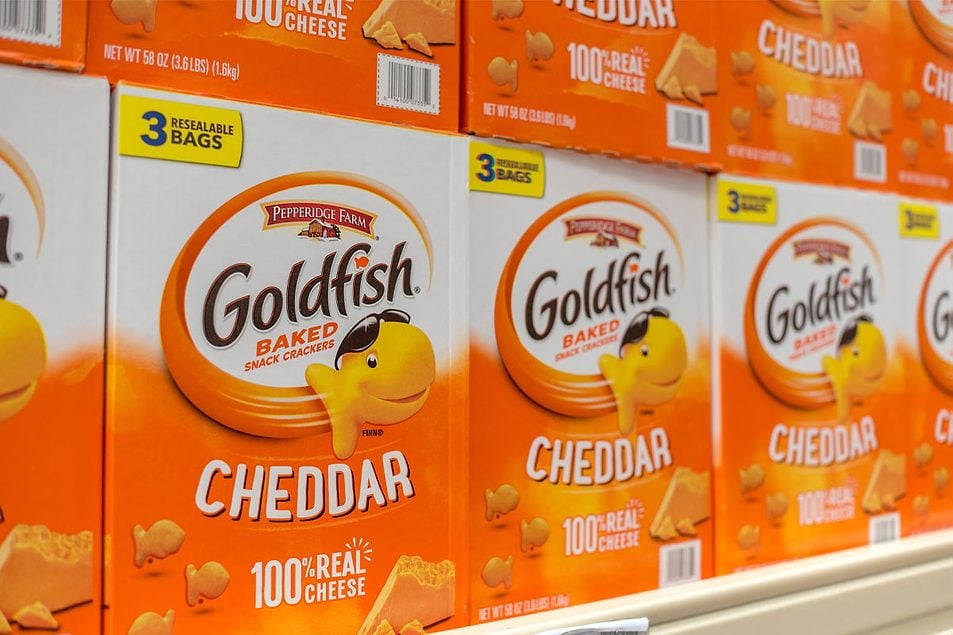
“In Meals & Beverages, in-market demand grew, driven by our leadership brands including Rao’s, and that strength continues to anchor our portfolio,” he explained. “In Snacks, the recovery is taking longer than anticipated. We made sequential progress on Goldfish, but Fresh Bakery execution disruptions and elevated competitive intensity in Salty weighed on volume and margins. We are taking focused actions to restore Fresh Bakery service, to sharpen our value, launch incremental innovation and improve in-market execution in Salty, while continuing to build on Goldfish momentum.
“At the same time,” he added, “we’re accelerating enterprise cost savings to support margins and reinvestment, including $100 million of additional near-term overhead reduction initiatives that will increase efficiency and effectiveness across the organization.”
Earnings slide
For the quarter ended Feb. 1, net income fell 16% to $145 million, equal to 48¢ per share on the common stock, from $173 million, or 58¢ per share, a year earlier. Excluding the impact of cost savings and optimization initiatives, as well as other items, adjusted net earnings dropped 32% to $152 million, or 51¢ per share, from $222 million, or 74¢ per share, a year ago. Wall Street’s low-end estimate was for adjusted earnings per share of 54¢.
First-half net income was down 13% to $339 million, or $1.13 per share, from $391 million, or $1.30 per share, in the prior-year period. Adjusted net earnings fell 22% to $382 million, or $1.28 per share, from $489 million, or $1.63 per share, a year earlier.
“Largely driven by the near-term outlook for our Snacks business and select incremental trade investments, we’ve updated our fiscal 2026 guidance,” Beekhuizen said. “We remain focused on executing our strategy and are increasing our intensity, especially on Snacks execution and cost savings.”
Campbell’s now projects adjusted EPS of $2.15 to $2.25 for the full year, down from its previous forecast of $2.40 to $2.55, and organic net sales to decline by 1% to 2%, compared with its earlier outlook for a 1% decrease to a 1% gain.
“Based on the slower-than-anticipated recovery in Snacks and incremental trade investments, we are updating our full-year guidance ranges … to reflect a more cautious view of the balance of the year,” said Todd Cunfer, chief financial officer. “Additionally, the newly imposed 10% global tariff under Section 122 will result in a modest increase to our second-half tariff headwind. Lastly, our updated guidance does not include any potential impact regarding the Iran conflict.”
Ongoing weakness in Snacks
Second-quarter net sales decreased 5% to $2.56 billion from $2.69 billion, with organic net sales down 3% on a 4% decline in volume/mix, flat net price realization and a 1% impact from the February 2025 sale of the noosa yogurt business, Campbell’s said.
“In-market consumption improved sequentially from down 1% in Q1 to flat in Q2, driven by Meals & Beverages,” Beekhuizen said. “Organic net sales declined 3% in Q2, reflecting lower-than-anticipated in-market consumption within Snacks in combination with shipment delays late in the quarter, which largely impacted Meals & Beverages.”
Campbell’s Snacks net sales fell 6% year over year to $914 million and were down 6% organically on a 6% decrease in volume/mix and flat net price realization. The company attributed the declines primarily to decreases in chips and pretzels, supply constraints in Fresh Bakery, and third-party partner brands and contract manufacturing. Operating earnings sank 39% to $67 million.
“Snacks performance in the quarter was weaker than we expected, driven by lower-than-anticipated in-market consumption as sequential progress in Goldfish was offset by the execution challenges in Fresh Bakery and increased competitive intensity within our Salty portfolio,” Beekhuizen said.
“Importantly, while the quarter was pressured, we’re making progress in key areas and remain confident in the strength of our Snacks brand portfolio and our right to win,” he noted. “We participate in categories where consumers continue to seek connection, comfort and elevated experiences. Our focus now is on maintaining the momentum within Goldfish, improving our execution within Fresh Bakery and increasing our competitive position within our Salty portfolio.”
In the quarter, manufacturing and distribution disruptions for the Pepperidge Farm Fresh Bakery business were exacerbated by the January winter storm, Beekhuizen said.

The January winter storm exacerbated manufacturing and distribution disruptions in the Pepperidge Farm Fresh Bakery business.
| Photo: ©BILLTSTER – STOCK.ADOBE.COM“We quickly deployed a cross‑functional team fully focused on improving the execution, and we’re already seeing measurable improvements,” he said. “As part of our efforts, we’re investing to make sure the improvements are sustainable as we turn the trajectory of the Fresh Bakery business. I expect us to continue to make progress throughout the third quarter and be fully recovered during our fiscal fourth quarter. The overall brand is in a good position, which is giving us confidence that, as execution improves, Pepperidge Farm Bakery will return to sustainable growth.”
Net sales for Meals & Beverages declined 4% to $1.65 billion in the second quarter. Excluding the noosa divestiture, organic net sales decreased 2%, mainly reflecting declines in US soup, Prego pasta sauces, foodservice and V8 beverages, partially offset by gains in Rao’s, Campbell’s said. A 2% decrease in volume/mix was partially offset by a 1% uptick in net price realization. January storm-related shipment delays represented a 1% sales headwind. Operating profit fell 15% to $252 million.
Campbell’s first-half net sales totaled $5.24 billion, down 4% year over year and a decrease of 2% on an organic basis. Snacks net sales were down 4% to $1.93 billion, with the same decline organically. Meals & Beverages net sales also decreased 4%, to $3.32 billion, but were down 2% organically.
“In the second quarter, Campbell’s made progress towards its fiscal 2028 cost savings target of $375 million by delivering approximately $20 million in new savings, bringing total cost savings achieved to $180 million,” Cunfer said. “The company continues to expect these cost savings to be one of several levers to help offset tariff headwinds. We will be aggressive on cost savings initiatives and have identified additional near-term cost savings, including $100 million of overhead reductions over the next couple of years.”
#Snacks #remain #problem #Campbells
About the Author