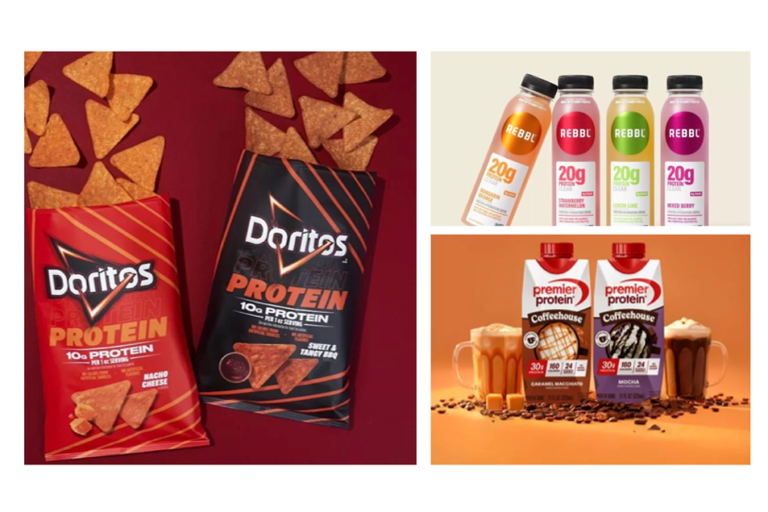

KANSAS CITY — Anti-obesity medications (AOMs), such as GLP-1 receptor agonists, may help reshape how Americans eat. Food and beverage companies are trying to respond with products that meet AOM users’ needs in terms of portion size, nutritional content and sensory preferences, all while factoring in possible consumer concern about ultra-processed foods.
According to research from IFMA, The Food Away from Home Association, Chicago, 11% of US consumers have tried GLP-1s for weight loss and blood sugar stabilization, another 22% are interested in trying them or knowing more. This growing segment could significantly impact sales at restaurants and convenience stores, said Charlie McConnell, vice president-industry insights, education and research at IFMA.
If GLP-1 use increases — and it is expected to with a new pill format being introduced — McConnell expects to see a decrease in traffic across the food-away-from home ecosystem, including quick-service restaurants, fine dining, fast casual and even nightclubs.
“GLP-1 usage will impact the away-from-home lunch occasion the most since it’s the most convenient-driven meal of the day,” McConnell said. “Dinner will be the least impacted since it’s the most experience-driven meal of the day.”
This outlook suggests that packaged food formulators could focus on products for lunch, with convenient items that may be consumed at a desk, while on a walk or in transit. Products for foodservice could emphasize experience and inclusivity, inviting the GLP-1-using customer to feel part of the dinner table.
Utilizing data
While there are still many unknowns regarding GLP-1s, what is understood currently may assist in product development.
“These medications can change how individuals experience hunger and fullness, so teams across the industry are asking new questions about what consumers may need while using, transitioning off or exploring options that support similar wellness goals,” said Vanessa Bailey, senior manager, global strategy and innovation, healthful solutions, Ingredion Inc., Westchester, Ill. “As companies consider the shifts of how GLP-1 medications influence eating, there is increased attention on nutrient density along with sugar reduction and the role of fiber and protein fortification. These attributes can help support satiety, weightmanagement efforts or overall wellness, depending on a consumer’s situation.
“Brands that understand these evolving expectations can develop products that align with a wide range of experiences throughout the GLP-1 journey. While their motivations differ, all three groups prioritize adequate nutrition within a calorie-reduced diet, digestive support and muscle mass maintenance.”
Vaughn DuBow, senior director of marketing, North America health and wellness, ADM, Chicago, added, “Current users need products that can be supportive companions to AOMs, while former users need solutions that help maintain results. Brands that align formulation strategies to these specific stages can play a meaningful role across consumers’ weight management journeys.”
Proprietary ADM research shows consumers taking AOMs are highly satisfied with their progress. They also are actively willing to invest in products that help them succeed.
“In fact, 80% are willing to pay more for products with added health benefits, and 67% say GLP-1-friendly attributes now matter more,” DuBow said. “Because appetite and intake are reduced, products must deliver high nutritional density in smaller portions, with a strong emphasis on protein quality to support lean muscle mass. Equally important is minimizing gastrointestinal discomfort, a common side effect, through pre-, pro- and postbiotics. Hydration support, including electrolytes and formats that encourage regular fluid intake, is also essential, as many users report dehydration and weakness.”
When surveying post-GLP-1 consumers, ADM found that nearly 70% of former users felt AOMs were effective. The top reason for stopping was success in reaching weight or health goals (36%).
“After stopping the medication, however, many consumers report the return of cravings and ‘food noise,’ along with concerns about weight regain,” DuBow said. “As such, post-use formulations should prioritize satiety, appetite control and weight maintenance. This may include leveraging protein and fiber to extend fullness, as well as biotics for overall metabolic health support.”
Cost and side effects also were noted as reasons for stopping AOMs, according to the ADM research. Thus, these solutions also must feel affordable and suitable for long-term daily use.
“There are a lot of end manufacturers out there whose brands are already going in the right direction,” said Denisse Colindres, senior manager nutrition communication, North America, Beneo, Parsippany, NJ. “Often it is not about completely new product developments but rather adapting existing products to the special needs of GLP-1 users, (such as) smaller portion sizes.”
Sensory attributes
Texture and taste may become especially critical considerations in foods and beverages intended for AOM users. That’s because these medications don’t just reduce appetite, they reshape the entire eating and drinking experience.
“Because of this, the GLP-1 community will gravitate toward familiar flavors, softer textures and balanced sweetness, and brands need to formulate with that sensory reality in mind,” Colindres said. “Additionally, GLP-1 users likely are on the lookout for products that improve their mood, as studies show that GLP-1 medications have the potential to increase depression.”
Becca Henrickson, senior category development manager, Tate & Lyle, Hoffman Estates, Ill., added, “Consumers currently on a GLP-1 drug seek ‘food joy’ through comforting textures and sensory enjoyment, even in reduced quantities. Satiety is less of an immediate concern because the drug supports feelings of fullness.”
Recent Tate & Lyle research showed that consumers on a GLP-1 journey increasingly prefer airy or crispy textures, as well as multi-layered combinations to maximize enjoyment in small portions.
“Additionally, texture can influence eating rate, and slower eating can contribute to greater fullness,” Henrickson said. “This is an important benefit, especially for former users looking to manage increased appetite.”
Keith Albright, senior insights manager, Cargill, Minneapolis, said, “GLP-1 users are highly attuned to the eating experience and look for products that feel worth the calories. That makes delivering a satisfying sensory experience just as important as delivering nutritional attributes.”
Taste, especially sweetness perception, also often shifts when taking AOMs, DuBow said.
“Products that were once enjoyable may suddenly taste too sweet, leading to rejection rather than satisfaction,” he said.
The shift in taste may be surprising for consumers and may result in a narrowed diet if options aren’t aligned with their new sensory palate. Flavors often need to feel purposeful, balanced and not overstimulating.
“Subtle sweetness, savory or lightly salted profiles may perform well with this consumer group,” DuBow said.
Beverages also should be lighter and refreshing, so that GLP-1 users finish all of it for the nutrition content, said Whitney Evans, director of nutrition science, research and innovation, Danone North America, White Plains, NY. That idea went into the design of Danone’s Oikos Fusion, a cultured dairy beverage for consumers prioritizing health-conscious choices, which include those on GLP-1 weight loss medications.
The drink features a patented blend of nutrients — whey, leucine and vitamins — designed to help build and retain muscle mass during weight loss. One 7-oz bottle contains 23 grams of complete protein, 5 grams of prebiotic fiber, and vitamins, including D, B3 and B12. The lactose-free, 0 grams added sugar drink was formulated to have a light consistency. The refrigerated, 130-calorie cultured dairy drink comes in mixed berry, strawberry and vanilla flavors.
“People on a weight loss journey often eat less, so it’s crucial to focus on the nutrient density of the foods they do eat,” Evans said. “When protein needs are not met, the body will start breaking down muscle to get the amino acids it needs. Fiber is also important considering its role in digestive health and because most Americans fall short on fiber intake.”
Laima Liepinyte, senior sales development manager, sales development sport and health, Arla Foods Ingredients, Basking Ridge, NJ, added, “Beverages are a natural choice for nutritional support. They provide a simple, comfortable alternative to a full meal of solid foods, and they provide nutrition and hydration at the same time.”
Some of these products include ready-to-drink shakes, enhanced waters, and functional coffee and tea, all of which provide flexibility for adding protein and fiber.
“Texture matters more for people using GLP-1s because they’re often more sensitive to how food feels when they eat it,” said Vanessa Williams, marketing and innovation director, Leprino Nutrition, Denver. “Smooth, easy-to-consume foods are more enjoyable and easier to tolerate, especially in smaller portions.
“When products taste good and go down easily, people are far more likely to make them part of their daily routine. And instead of positioning these products as ‘diet’ foods, brands can present them as modern, nutrient-dense choices for busy lifestyles. Using positive, inclusive language helps these products feel approachable and relevant to everyone, not just those on GLP-1s.”
#Formulating #foods #GLP1
About the Author