As budget plans revealed, senior councillor says ‘ We borrowed too much, and we took on too much risk’

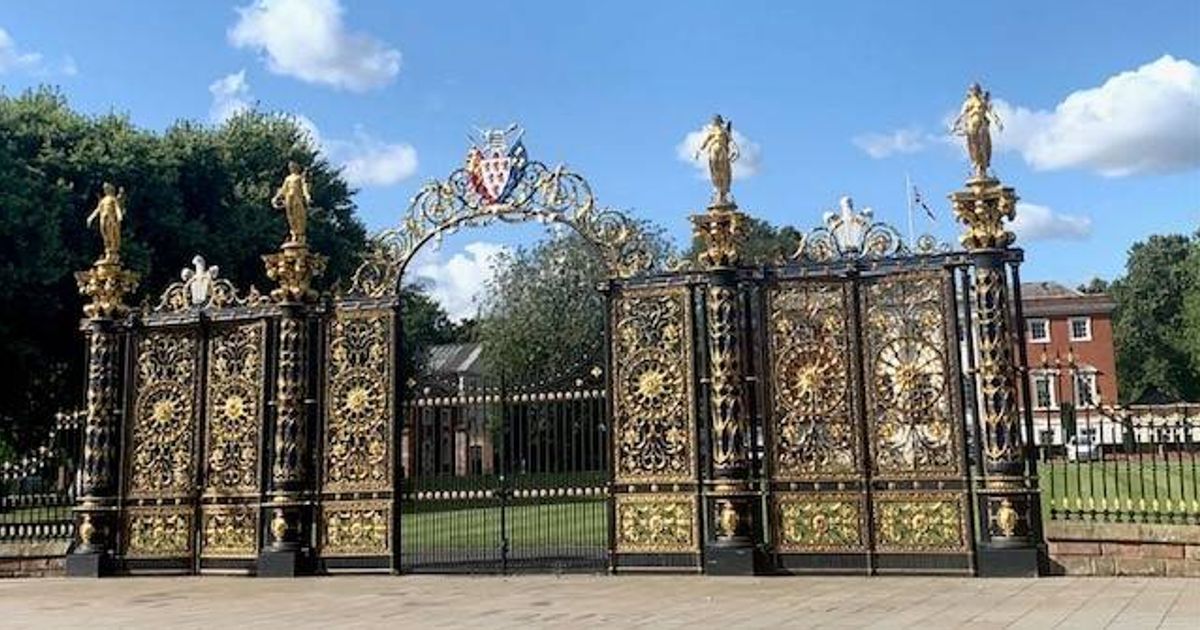
The gates to Warrington Town Hall (Image: Local Democracy Reporting Service)
Cash-strapped Warrington Borough Council has published its budget plan – and confirmed its commercial portfolio value has declined significantly with a ‘potential liability’ of around £275 million.
The Labour-run authority has published its budget plan for the next four years, including a detailed budget for the 2026-27 financial year.
The council’s budget report sets out its financial outlook for the next four years and, for the first time, shows in one place the full budget gap to 2029-30. The report published today, Friday, also contains an appendix, which is a report from the ministerial envoys about the council’s commercial portfolio.
While in December 2025 the council reported a projected £90 million gap, two other key factors have been analysed in detail which have added more pressure to the budget. These two additional items are the council’s commercial programme, and the fact that it has six years of unaudited accounts.
The initial £90 million budget gap reported in December 2025 has therefore been revised to £130 million, ‘largely due to the impact of these two local issues’.
‘We borrowed too much’
The council’s cabinet member for finance, Cllr Denis Matthews, said: “The reports published today detail that our difficulties stem from inadequate budget control, an over-ambitious commercial approach, and several years of unaudited accounts.
“We are victim to national issues, such as rising demands and costs for some services, particularly services that support our young people, families and older adults.
“But specific local issues have also played a significant role in driving our budget issues.
“In recent years, instead of making difficult service cuts when many other councils did, we have relied heavily on income generated from our commercial activity. And, while our commercial portfolio has provided a surplus of around £166 million since 2009, all of this money has been used towards covering successive budget gaps.
“It is clear now that the commercial approach did not provide the level of sustainable returns anticipated and has instead left us with significant risks and costs. We borrowed too much, and we took on too much risk – to the point where it is now clear that our overall commercial approach has failed.
“The value of our portfolio has declined significantly, with a potential liability of around £275 million. We are developing a plan to assess the future of each of our commercial assets. However, there will be no ‘fire sale’ of our assets, and we will manage the next steps in a measured way, with the support of our ministerial envoys.
“Equally, while audit delays exist across the local government sector, in Warrington we have a six‐year backlog, which is highly unusual and is linked to the complexity of our commercial portfolio. We have a plan to resolve this, but risks arising from any recommendations from these audits, mean we must factor further pressure into the budget.”
Other pressures on the budget
The council’s revised £130 million budget gap is based on some other contributing factors. This includes demand on adult social care services, the costs of paying back exceptional financial support (EFS), subject to agreement, and a level of contingency to support the delivery of identified savings. A further pressure is due to impacts of the local government finance settlement, which provides the council with ‘around £6 million less funding over the settlement period’.
The outcome of the council’s application for EFS is expected in late February. An EFS agreement could include a council tax increase above the 5% limit. The outcome of seeking EFS will be shared by the council when known.
‘Best outcomes for residents’
Cllr Matthews said: “With the support of our ministerial envoys, we will maintain a clear and consistent understanding of the scale of the financial challenge facing the council in the coming years. We have identified £40 million of savings so far, agreed our improvement and recovery plan, and are now focused on developing our transformation programme.
“The transformation programme will support us to fundamentally change how the council operates, help us to close the remaining budget gap, ensure we prioritise the services that support the best outcomes for our residents, and enable us to work alongside our communities in new ways.”
The council’s budget plan will go to scrutiny committee on February 16, cabinet on February 18, and budget-setting full council on March 2.
To read the reports visit the council’s committee management system.
#Council #warns #275m #potential #liability #commercial #property #portfolio #fire #sale
About the Author