KANSAS CITY — Many consumers understand dietary fat is an important macronutrient. However, there may be confusion in the aftermath of the release of the Dietary Guidelines for Americans (DGA), 2025-2030 regarding what fats are healthy and how much to consume. The answer is yet to be decided, as the DGA states: “More high-quality research is needed to determine which types of dietary fats best support long-term health.”
The DGA instructs Americans to “incorporate healthy fats from whole foods, such as meats, seafood, eggs, nuts, seeds, olives and avocados,” as well as to “consume full-fat dairy with no added sugars.” The DGA includes “when cooking with or adding fats to meals, prioritize oils with essential fatty acids, such as olive oil. Other options can include butter or beef tallow.” The DGA also states saturated fat consumption should not exceed 10% of total daily calories, and that significantly limiting highly processed foods will help meet this goal.
“The new DGAs include some messages about dietary fat that may be interpreted in different ways,” said Mark Messina, nutrition science fellow with the Soy Nutrition Institute Global. “The long-standing recommendation on saturated fat was maintained, but this was alongside emphasis on consuming diverse protein sources, including animal proteins, some of which may contribute saturated fat.”
When whole milk dairy foods, butter, beef and beef tallow — all concentrated sources of saturated fat — are part of the daily diet, it becomes more likely saturated fat intake will exceed the 10% of calories advised.
The DGAs further contribute to the growing conversation about seed oils. The relatively stable cooking oils are used in all types of food formulations. The oils are extracted from plant seeds and often broadly identified as vegetable oils. Soybean, canola and corn oil are the most common. The DGAs don’t mention the oils.
“Whether the new DGAs change consumer eating habits remains to be seen, but much of the messaging regarding dietary fat diverges from the scientific literature,” Messina said.
Less than a year ago, Americans were relatively indifferent when it came to fats and oils, according to the 2025 FATitudes survey from Cargill, Minneapolis. The survey tracks consumer perceptions around fats and oils used in packaged foods and can guide formulators making ingredient decisions.
“While olive oil and avocado oil continue to score well with consumers, overall attention to fats and oils is declining,” said Stacy Borders, technical services specialist, Cargill. “Only 17% of consumers said they pay extremely close attention, which is down four percentage points from 2024 and falling to its lowest level since the study began in 2013. Overall, a full third of consumers report being neutral about the fats and oils used in packaged foods, the highest share ever recorded.”
Understanding fat composition
With almost one out of every five Americans paying “extremely close attention” to the fats and oils in their foods, according to Cargill’s research, many perceived-as better-for-you brands are trying to formulate products that appeal to these shoppers.
Further, fat and oil selection for packaged food formulations is based on more than fatty acid profile. Selecting a fat or oil for a specific product involves understanding the manufacturing process, being aware of potential ingredient interactions, identifying the desired shelf life and committing to marketing claims. Economics and supply chain are important, too.

Combining a solid fat — such as beef tallow or a saturated oil like palm — with polyunsaturated seed oils that contain lower levels of saturated fat may help manufacturers to strike a balance between nutrition and required functionality.
| Photo: ©DAVID PIMBOROUGH – STOCK.ADOBE.COMFats and oils provide functionality and influence taste and texture in food formulations. The physical and rheological properties of fats and oils, along with nutritional value, are determined by the distribution and composition of the three fatty acids on the triacylglycerol backbone that make up the molecule.
The greatest visual difference between fats and oils is certain fats may be solid at room temperature, as they contain more saturated fatty acids. Oils are fluid. They are predominantly made of unsaturated fatty acids. Both contain different levels of mono-, poly- and saturated fatty acids. In other words, if fat is added to a formulation the finished product can contain all three types of fatty acids.
“Swapping fats and oils for any reason presents formulators with key challenges in maintaining critical functionality, such as desired structure, texture and mouthfeel, alongside preserving the original flavor profile,” said Aliess Bedford, director, product development and applications, Bunge, Chesterfield, Mo. “Processing adjustments and potential cost implications are also considerations.”
Conventional seed oils have long been popular in formulations, as they are high in omega-6 polyunsaturated fatty acids. There also are seed oils that have been bred to be more stable. These are referred to as high-oleic, as they are higher in omega-9 monounsaturated fatty acids than their conventional counterparts. Mono-unsaturated fatty acids do not oxidize as quickly as polyunsaturated fatty acids.
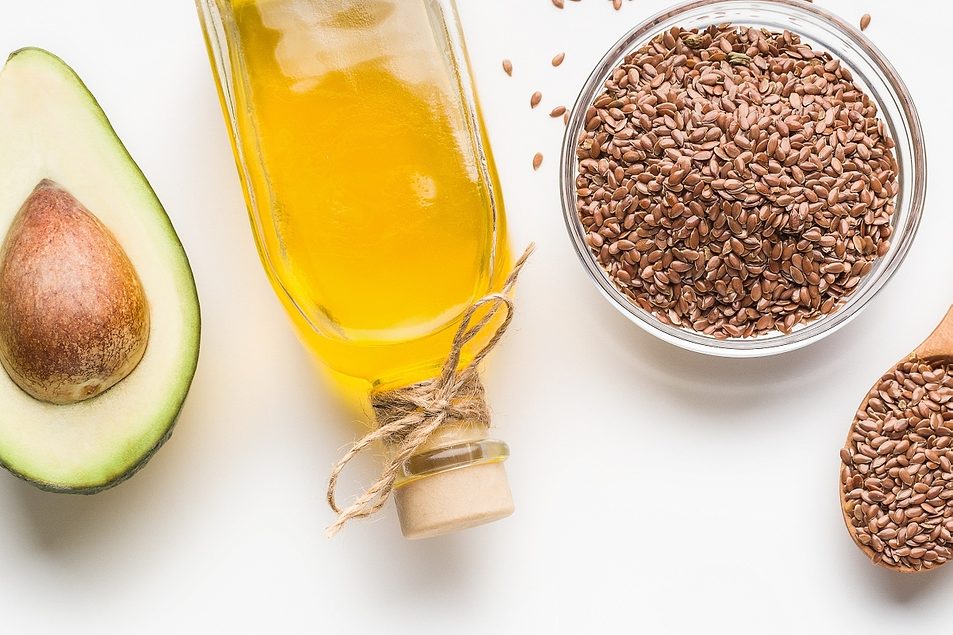
Fruit-derived oils, such as those obtained from avocados or olives, are higher in omega-3 polyunsaturated fatty acids, which are associated with reducing the risk of hypertension and coronary heart disease. In fact, since 2019, the US Food and Drug Administration has allowed for a “heart healthy” qualified claim for omega-3 fatty acids.
Formulation trends
Many brands that are perceived as better for you started focusing on the use of oils high in omega-3 fatty acids when consumer pushback on seed oils gained momentum in early 2025. Snackios, Clifton, NJ, for example, reformulated its pita chips and bagel chips to remove seed oils, claiming the products have one of the cleanest labels in the category. The company now uses avocado oil and extra virgin olive oil, said co-founder and vice president Jean-Raffi Nazarian. The chips are twice-baked to deliver crunch while maintaining a short ingredient list.
“The use of olive and avocado oils come at a higher cost, which will likely limit their widespread adoption and use with food formulators,” said Steven Council, customer innovation manager, AAK USA, Edison, NJ. “High oleic sunflower and safflower oils will continue to provide the least constraints while providing superior performance, oxidative stability and shelf life.”
RIND Snacks, New York, tries to balance fats in its new Raspberry Almond Granola Squares. The squares are made with oats, nuts and seeds, all held together with olive oil.
Harvest Snaps from Calbee America Inc., Torrance, Calif., recently completed a packaging makeover to highlight that the snacks are formulated with peas or lentils. A new “Made with Real Veggies” seal, along with protein and fiber callouts, are intended to differentiate the brand from others. Harvest Snaps also will transition its entire portfolio from vegetable oil to avocado oil later this year.

Harvest Snaps recently completed a packaging makeover to highlight protein and fiber, and will transition its entire portfolio from vegetable oil to avocado oil later this year.
| Photo: Harvest SnapsDespite the move away from seed oils in some products, “high-oleic soybean, high-oleic canola and high-oleic sunflower oils continue to be popular in food formulations,” Bedford said. “Their neutral flavor and high smoke points make them excellent for high-heat applications, like sauteing, deep-frying and roasting. In addition, the characteristics contribute to extended product shelf-life without needing to use artificial preservatives, which align with clean label initiatives that are increasingly popular among consumers.”
Jenny Djupedal, marketing director-ingredients at Bunge, added, “Using high-oleic oils does present unique considerations compared to conventional vegetable oils. The primary limitation is supply chain related. High-oleic oils require diligent planning because the specialty seeds needed to produce the oil must be planted nearly two years before the oil is ready to be sold.”
Manufacturers of high-oleic oils work closely with growers to ensure supply meets the growing demand for the products. The supply chain also may become an issue with butter and beef tallow, if demand exceeds cattle herd size.
“Beef tallow has become more popular over the last few years, primarily among consumers seeking animal-based fats for its flavor and texture or nostalgic culinary experiences,” Bedford said. “With a higher price point compared to many other oils on the market, tallow is likely to appeal to more affluent segments of the population.”
Blending also may be an effective strategy. Combining a solid fat — such as beef tallow or a saturated oil like palm — with polyunsaturated seed oils that contain lower levels of saturated fat may allow manufacturers to strike a balance between nutrition and required functionality.
“We’re seeing strong demand for customized oil blends designed to meet specific formulation targets,” Borders said. “While single-source oils offer defined performance characteristics, oil blends unlock greater flexibility. For example, if a product requires the stability and nutritional benefits of high-oleic canola oil along with enhanced browning and fuller mouthfeel, blending with another oil may achieve the desired effect. Advanced processing technologies can further fine-tune these blends to meet precise formulation needs.”
Council added, “Consumers will continue to make diverse food choices beyond strict guideline adherence, often for reasons of taste, convenience, cost or personal preferences. In those situations, seed oils will continue to remain a healthy, versatile and cost-effective option.”
#Fats #oils #spotlight
About the Author