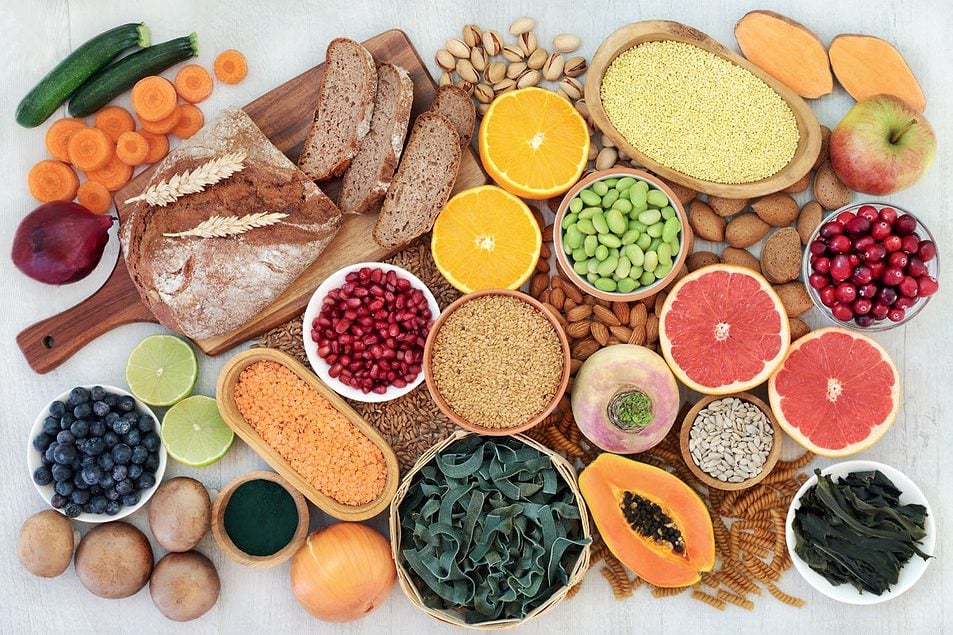
WASHINGTON — US consumers generally want to consume more fiber, but their knowledge of it could improve, according to a survey released by the International Food Information Council in February. The survey also explored consumer knowledge and interest in whole grains.
IFIC pointed out that “fiber-maxxing” can be found often on TikTok and Instagram and some in the food and beverage industry forecast fiber as the “new protein.”
“Fiber is suddenly everywhere in the wellness conversation,” said Wendy Reinhardt Kapsak, president and chief executive officer of IFIC. “Yet our data show most Americans still don’t know how much they need or where to get it. There’s a real disconnect between cultural hype and everyday understanding and action.”
Fewer than 10% of women and 3% of men meet fiber recommendations, which is 14 grams per 1,000 calories, or about 21 to 38 grams per day depending on age and sex, according to IFIC. In the survey, 29% said they consumed fewer than 20 grams per day, and 37% said they were not sure how many grams of fiber per day they consumed.
Seventy-three percent said they strongly agreed or somewhat agreed that eating fiber is good for health. When asked what they perceived to be the best sources of fiber, the top answers were vegetables at 48%, fruit at 46%, grain foods at 41%, nuts and seeds at 39%, and cereals at 38%.
Among the 1,006 US consumers age 18 and older who completed the online survey from Oct.22-30, 2025, zero percent said they do not want or need to increase fiber intake.
“As someone who regularly analyzes consumer data, that zero percent really stands out,” said Kris Sollid, senior director of research and insights for IFIC. “It suggests that Americans realize the importance of fiber in the diet and believe they would likely benefit from consuming more, which is encouraging.”
 Photo: IFIC
When asked what barriers kept them from increasing fiber intake, the top answers were not knowing what foods contain fiber at 30%, the cost of high-fiber foods at 27% and the taste of high-fiber foods at 26%.
More than 95% of US adults do not consume the recommended level of whole grains, according to IFIC. The recently updated Dietary Guidelines for Americans recommends two to four servings of whole grains daily.
In the survey, 70% said they believed eating whole grains is good for health and 61% said they were trying to consume foods that are high in whole grain content. When asked why they should consume whole grains, the top three answers were a healthy diet at 37%, increase fiber intake at 30% and support overall gut health at 28%.
When asked about carbohydrate-rich foods, 25% said they believed the foods can be part of a healthy diet, 30% said some carbohydrate-rich foods can, and 12% said they cannot. Other answers were not sure at 14% and not knowing which foods are carbohydrate-rich at 19%.
The top package claims that respondents said they looked for were 100% whole grain at 29%, no added sugar at 29%, good or excellent source of fiber at 28%, and heart healthy at 27%. When asked what they checked for on the Nutrition Facts Label, 19% said total carbohydrates, 17% said dietary fiber and 15% said added sugars.
#Consumers #seek #fiber #lack #knowledge
About the Author