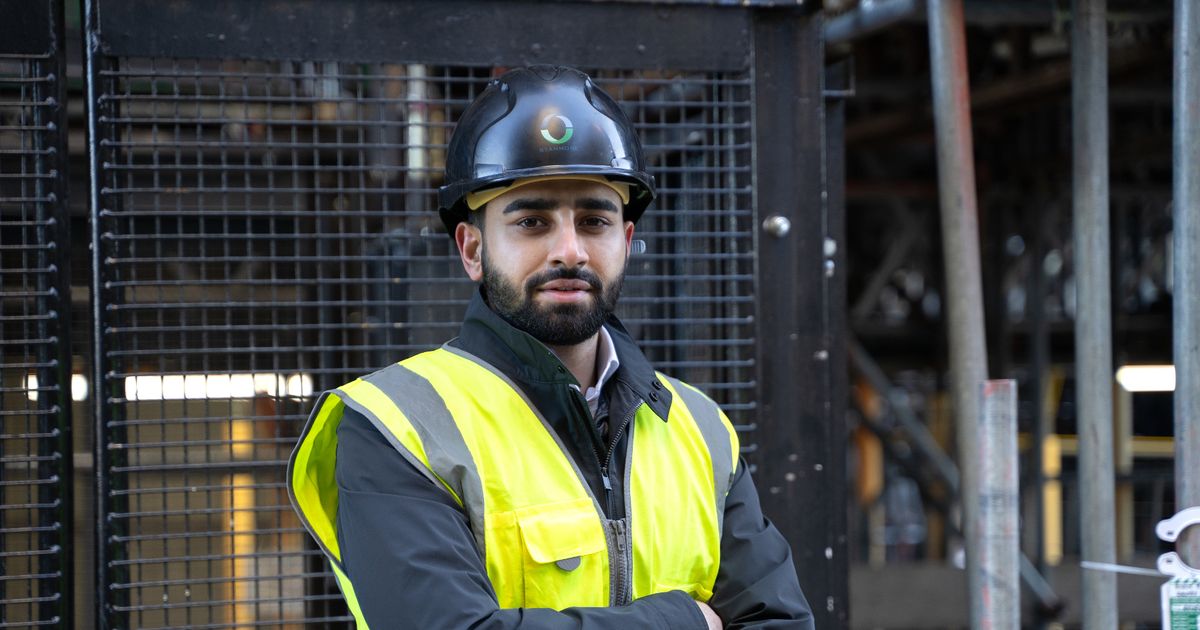
Haman Manak, deputy managing director of Stanmore, on Greater Manchester’s transport needs

Haman Manak says Manchester’s transport needs should be a national priority(Image: Stanmore)
For almost 200 years, Manchester has wanted an underground railway network of its own. The earliest plans were put forward in 1839 — and in the years since, demand for underground infrastructure has not gone away.
In recent months, the conversation has reignited. This time, fuelled by Mayor Andy Burnham’s ambitious plans for the city to have its own underground network by 2050.
It’s an exciting proposition, and a much-needed solution to the city’s growing congestion. But these plans are far from set in stone. There’s every chance that other infrastructure projects, like the recently revived Northern Powerhouse Rail, could result in an either/or situation that sees Manchester’s underground project fall by the wayside.
Public transport is a devolved matter – but I think there’s a mounting case for the central government to designate this plan as a national infrastructure priority. By linking it to the UK’s Industrial Growth Strategy and ringfencing funding, it can prevent plans from grinding to a halt.
This concern isn’t unfounded. It wouldn’t be the first time plans for an underground have fallen through. Manchester came tantalisingly close to a metro system in the early 1970s with the proposed Vicc-Pic line, a rail link connecting two main line stations. Planning went far enough to reach the proposal stage, with a grant for funding submitted to the government at the time.
Ultimately, that’s where the project went to die. Against a background of economic strain, funding for the project was refused.
But now, fifty years on, the same issues that were raised in initial debates around the Picc-Vic line are echoed today. In 1975, the MP for Bolton described the proposed Picc-Vic line as an “artery” that the “economic and social life” of his constituency would depend on (Hansard).
But the socio-economic case for an underground is arguably even stronger today than it was then. Manchester is growing faster than anywhere else in the UK, with an annual growth rate of 3.1% – more than double that of the UK as a whole. The city has also seen a surge in its population in recent years. Between 2011 and 2021, the population increased by almost 50,000 people.
It’s an exciting chapter in Manchester’s history, but it’s not without its challenges. Congestion is leading to increased travel delays on the road, while one of the city’s central rail passages, the Castlefield corridor, is considered one of the UK rail network’s greatest liabilities.
These delays put a ceiling on growth. A 2022 study found that poor travel infrastructure is costing the Northern economy more than £16bn in lost productivity. But beyond the clear economic case, poor public transport links also carry with them a very human cost. And it’s often society’s most vulnerable members who pay the price.
Research has shown that there are clear links between poor transport provision and social exclusion, which then has other major implications. People struggle to reach their local hospital, travel to work, or access reasonably priced food.
It’s hoped that Manchester’s underground plans will address those concerns by easing the burden on existing rail infrastructure and by widening the public transport connections available to people. But with local budgets tightening, Northern infrastructure risks being framed as an either/or choice: with Northern Powerhouse Rail advancing while plans for an underground in Manchester are quietly sidelined.
Without clear direction and ringfenced funding from Westminster, that trade-off becomes inevitable. By taking decisive action, the central government can prevent plans for a metro system from falling through the cracks. First, by designating Manchester’s underground project as an economic priority, in line with its Industrial Growth Strategy; and second, by ringfencing funding.
It’s easy to view infrastructure projects as simply that: infrastructure. But I’ve seen firsthand, across my time in the construction sector, the real-world impact of people-first projects. It’s synonymous with national growth. It connects people with jobs and businesses with talent; it helps communities to grow and enables retail and leisure to flourish.
READ MORE: Biggest rail boost in a generation: £45bn Northern Powerhouse Rail scheme confirmed with plans for new Manchester-Birmingham lineREAD MORE: Business leaders want ‘concrete commitments’ as they welcome massive Northern Powerhouse Rail plans
If accelerating growth is a central government objective, then it needs to prioritise infrastructure that expands labour markets and enables urban development. And that’s exactly what this project is.
But designation alone is not enough. Without funding, strategic priorities remain just that: strategy. The government needs to ringfence funding for the planning and development of Manchester’s underground and ensure it’s not left competing alongside other infrastructure projects in the annual budget.
Previous failures to get plans for a metro off the ground are symptomatic of the sustained lack of public transport funding seen in the North. Recent research from IPPR found that transport spending per capita in London has been double the level of the North over the last decade – and has only grown.
This funding gap can’t continue. And, to its credit, the government has acknowledged the need for updated rail infrastructure in the North, committing £1.7 billion to improving buses, roads, and trams. I think there’s scope here to extend funding to the development of Manchester’s metro system.
Manchester is the fastest-growing city in the UK outside London, and that growth now demands transport infrastructure capable of supporting it. By designating plans for an underground as a strategic economic priority, the government can ensure the project receives the long-term backing and protected funding it requires.
Manchester has been holding onto the idea of an underground network for nearly 200 years. The question is no longer whether the city needs one – but how much longer it is expected to wait.
#Opinion #Manchester #transport #worthy #growing #city #dont #underground #plans #derail
About the Author