In 2026, food brands will be judged less by what they say and more by what they visibly prove — especially at the shelf. As prepared foods, grab-and-go meals, and heat-and-eat options continue to replace traditional cooking occasions, packaging has become one of the most immediate indicators of trust, safety, and reliability in food retail and foodservice environments.
Inline Plastics has seen this shift take shape over decades. A third-generation, family-owned, privately held company based in Shelton, Connecticut, Inline Plastics was the first to pioneer tamper-protection technology in all-clear packaging. Today, a broad range of food retailers, processors, and foodservice operators rely on Inline Plastics, not just for containers, but for packaging that protects food, reinforces trust, and performs consistently in real-world operations.
That trust is increasingly built at the container level. Consumers don’t evaluate prepared foods the same way they once did. They notice whether a package looks intact. They look for visible assurance that the food hasn’t been opened, altered, or compromised. In many cases, that decision happens in seconds, standing in front of a refrigerated case. If a container raises doubt, the sale is lost before the food ever leaves the shelf.
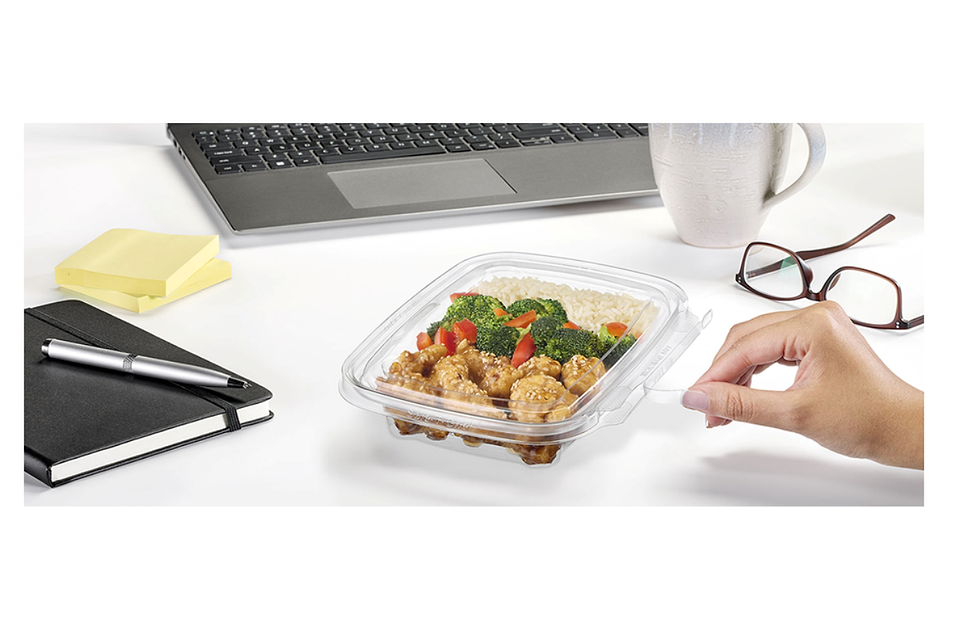
This is why tamper protection has shifted from a secondary feature to a core expectation. In high-traffic grab-and-go environments, packaging must do more than hold food — it must visibly protect it. Solutions like Safe-T-Fresh® tamper-evident and tamper-resistant packaging are designed for exactly this reality, helping retailers and foodservice operators reduce hesitation at the shelf while lowering the risk of contamination concerns, customer complaints, and costly product waste after food has already been prepared.
 Photo: Inline Plastics
At the same time, the way Americans buy food continues to evolve. Prepared meals, deli offerings, and grab-and-go selections are no longer occasional conveniences; they’re everyday solutions. These foods are often purchased for later consumption, transported, stored, and reheated, placing higher demands on packaging performance throughout the product’s lifecycle. When packaging underperforms, the consequences ripple outward — from shrink and lost sales to reputational damage and regulatory scrutiny.
Convenience has also expanded expectations around heat-and-eat meals. Consumers want solutions that can be taken home and reheated confidently without sacrificing quality or safety. Safe-T-Chef® packaging is engineered for these applications, supporting hot fill and reheating while maintaining strength, clarity, and tamper protection. This allows operators to expand meal offerings without adding labor, increasing operational complexity, or introducing unnecessary food safety risks.
 Photo: Inline Plastics
Even as convenience has surged, indulgence hasn’t disappeared — it’s become more intentional. Consumers are still choosing desserts, sides, and premium prepared foods, often in smaller portions. These products rely heavily on presentation to justify their value, particularly in refrigerated cases where purchasing decisions happen quickly. Smaller portions leave no room for visual compromise. Scratches, haze, or flimsy construction undermine perceived value instantly, regardless of food quality.
Clear, rigid packaging that maintains its shape and showcases the product inside plays a direct role in protecting margin and driving impulse purchases. In this context, packaging that enhances presentation doesn’t just protect food — it protects revenue.
Alongside safety and presentation, sustainability has become an expectation rather than a differentiator. Consumers, retailers, and brand owners alike are paying closer attention to environmental impact, pushing companies to move beyond aspirational claims toward measurable progress. Packaging choices are now scrutinized not only for performance, but for how responsibly materials are sourced and used.
For many food brands, this means prioritizing solutions that support circularity while still meeting demanding food safety and shelf-life requirements. Inline Plastics incorporates 10% post-consumer recycled (PCR) content into all PET products, helping brands advance sustainability goals without sacrificing clarity, strength, or food-safe performance. The challenge is no longer choosing between sustainability and functionality — it’s finding packaging that delivers both.
As sustainability expectations rise, regulations tighten, labor remains constrained, and consumer scrutiny intensifies, packaging now sits at the intersection of risk and reliability. It influences how food is protected, how brands are perceived, and how confidently operators can scale their offerings.
The brands that will succeed in 2026 and beyond will be the ones that treat packaging as a strategic asset rather than a commodity — choosing solutions that reinforce food safety, protect presentation, support convenience, and advance sustainability in ways that align with real-world operations.
Because in today’s market, packaging isn’t just supporting your product. It’s protecting your business — and Inline Plastics helps grow your business through smarter, safer food packaging.
Want to see how the right packaging can support your business? Talk with Inline Plastics.
#Packaging #Shape
About the Author