COLORADO SPRINGS, COLO. — Surging use of GLP-1 appetite-suppressing drugs by US consumers doesn’t spell doom and gloom for baked foods industry stakeholders, said Anne-Marie Roerink, president of food market research firm 210 Analytics.
“A lot of headlines have indicated that perhaps these consumers are going to pull out of categories like confectionery and bakery,” Roerink said in a presentation on the GLP-1 dietary impact at the 2026 American Bakers Association (ABA) Convention in Colorado Springs. “That is not what we’re seeing at all. In fact, what we are seeing is quite the opposite: These households are actually more highly engaged with the baked goods category, whether that’s meal-related items, baked treats/desserts or baked snacks.”
Currently, about 13% of Americans are taking GLP-1s, and that percentage stands to swell as the pill form hits the marketplace and insurers provide coverage. Yet an in-depth ABA Bakery Playbook survey of over 1,500 consumers — including some 400 now taking GLP-1s — found that users of the medication over-index for many baked foods categories, as well as for the confectionery category.
“To sum it up, it is not a demand destruction story, and I can’t say that enough,” Roerink said. “We are seeing a reshaping of baked goods engagement.”
Consumers using GLP-1s are more likely to eat meal-related bakery items, desserts and snacks four to seven days a week than non-users, according to the survey.
“Whether it was meal-related items, sweet treats and desserts, or baked snacks, such as crackers, pretzels and bars, for every single category, we saw that not only are they (GLP-1 users) more engaged, but they’re also engaging a little bit more frequently,” she said. “Many pointed to eating smaller portions but more frequent meals, driving cross-category engagement and frequency of consumption. But again, the message is this is not elimination but a reshaping of their engagement with the baked goods category.”
The Playbook survey revealed that an equal percentage of GLP-1 users (36%) either decreased or increased their consumption of baked treats since starting on the medication, with the rest reporting their intake of baked treats has stayed the same. In addition, GLP-1 users and non-users agree it’s OK to occasionally treat yourself to a baked snack or dessert, with around 90% of those polled in each group believing baked treats/snacks can be a great reward or escape. Just 29% of GLP-1 takers polled singled out baked foods as an area to cut back their consumption.
“Agreement on permissibility is high regardless of whether people take GLP-1 medications or not,” Roerink said. “It’s because baked goods and treats can be a little escape, a little reward after a long day. And if you think through their lifestyle of perhaps not eating three big square meals a day, but a lot of smaller portions, baked goods can find a way into those smaller portions very, very easily.”
For example, she said, baked items like snack cakes, cupcakes or brownies can meet a GLP-1 user’s desire for a smaller yet fulfilling smaller portion.
In population terms, 13% of US consumers take GLP-1s, and of those, 36% eat less, which boils down to 4.8% of Americans, based on the survey findings. Going further, 66% of those eating less report it’s because of being on a GLP-1 drug, and that translates to 3.2% of the population consuming fewer baked treats and desserts with the medication being a contributing factor. However, in most cases, consumers point to a host of factors, such as health and nutrition in general, budget and having shifted to something else, among others.
“The most important lesson in my mind surrounds the actual impact of how many people are on GLP-1s?” Roerink explained. “When you do that math, it’s very different than those headlines out there with a message of destruction of our categories. So the big message of today is, yes, GLP-1s have an impact on how they’re shaping this category and the engagement with the category, but it is not category elimination.”
Presenting with Roerink at the ABA was Rachael Degurse, PhD, a family physician and chief executive officer of Pearl Primary Care in Colorado Springs, who has been treating patients using GLP-1s for years. She told ABA attendees that the medication changes patients’ stance about eating due to “food noise,” including a reduced desire to eat plus potential side effects (e.g. digestive discomfort, fatigue) and differences in taste perception, such as in the level of sweetness and saltiness in baked snacks and treats.

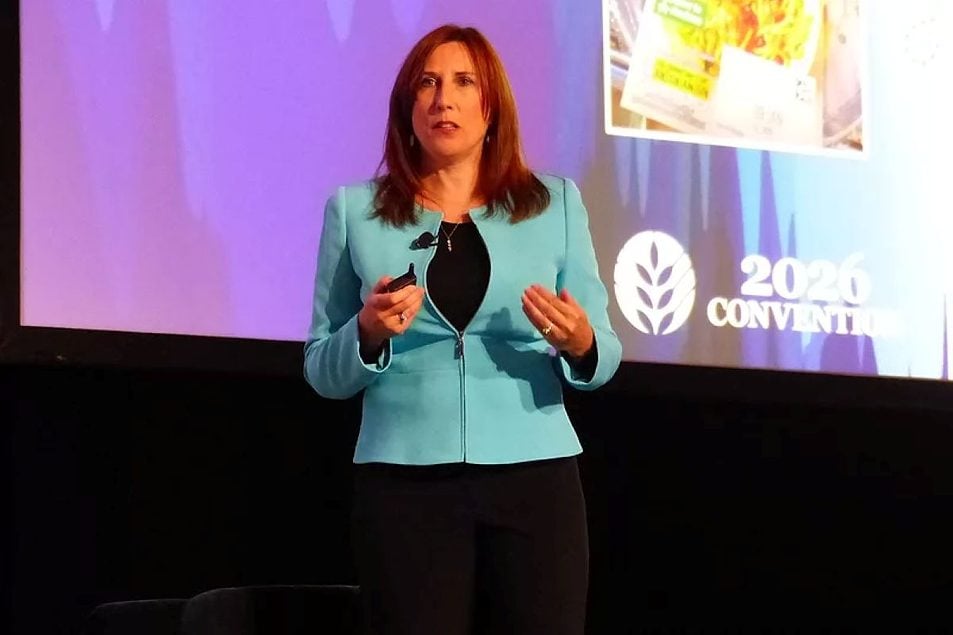
At the ABA Convention, family physician Dr. Rachael Degruse of Pearl Primary Care said her main dietary modification for GLP-1 users is more frequent but smaller meals.
| Source: Sosland Publishing Co.“The main dietary modification that I recommend is reduced size of meals, so more frequent but smaller meals,” she said. “Typically, about six small meals a day is what I recommend to my patients. Because of decreased size of meals, you do need to counsel patients on the types of foods that they’re eating, particularly with increasing protein intake. Protein intake is very important, as these people can lose a significant amount of weight on the medications.”
Baked foods like protein pancakes or protein muffins “can be really helpful for people to get more protein without eating a particularly large meal,” Degurse said, adding that she also recommends GLP-1 users reduce fat intake and increase fiber consumption.
“Baked goods would be a fantastic way for people (using GLP-1s) to increase their fiber intake because they’re naturally higher in fiber, particularly multigrain baked goods or baked goods that have oats in them,” she said, noting, “On these medications, there are not really any foods that you have to avoid, and you certainly don’t need to be counting calories or avoiding foods that you enjoy eating.”
In population percentages for consumers on GLP-1s, 2.9% eat fewer meal-related baked foods and 4.3% eat more, the survey findings indicated. Likewise, 3.2% eat fewer baked treats/desserts and 4.9% eat more, while 2.8% eat fewer baked snacks and 5.1% eat more. The percentages are less than half of those for GLP-1 users who cited financial strain as a reason for cutting back on these baked food categories.
Roerink noted this discounts the notion that those on GLP-1s are dropping out of the baked foods category.
“So myth No. 1 that is dispelled is the fact that these people continue to be involved with every category in the baked goods industry,” she said.
#GLP1s #reshaping #baked #foods #engagement
About the Author